
A gal pursuing an MFA in Writing at the School of the Art Institute of Chicago (SAIC) needs to take a seminar, an elective, and a workshop each term. There’s plenty more stuff you have to do on top of that, but those are the three categories under which actual courses fall.
On Thursday, I have to send out 15-20 pages of writing to the people in my spring workshop — and I’m nervous about it.
The writer’s workshop comes as a standard feature in any writing degree program and countless creative writing courses ’round the world. The writer’s workshop is a place for a student to get thoughtful feedback on her work from multiple perspectives and have a meaningful discussion with like-minded people (read: fellow writers.)
It goes like this:
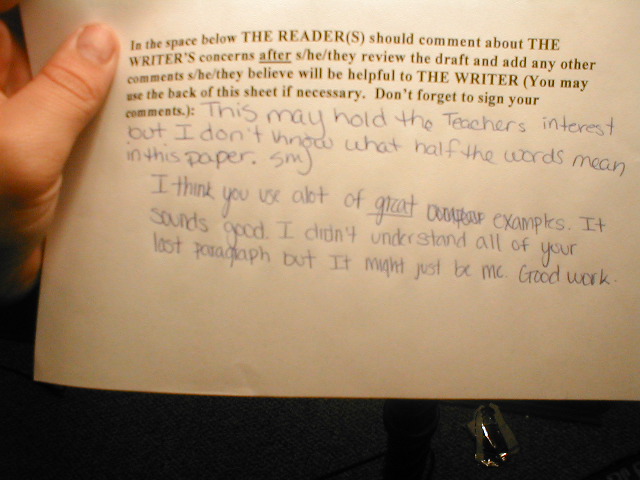
The writer provides her pages a week before class. Her classmates read her work carefully, make notes, respond to questions she may have posed beforehand. When workshop time comes, people go around the room and give their in-depth, generous-but-firm feedback while the teacher acts as benevolent moderator. The respondents ask for clarifications as needed; they pose questions. The writer isn’t usually allowed to comment until all feedback has been shared, however; she just takes notes, nods, and goes, “Mm-hm.” When everyone has shared their glowing praise and diplomatic criticism, she is allowed to respond to a few things. Workshop over, she thanks her fellow students, collects their notes, then goes back to her writing desk excited to incorporate what she’s gleaned from the vibrant conversation while at the same time realizing she must stay true to her vision.
That’s the best-case scenario. And plenty of workshops go something like that. Other ones, not so much. This is because there are problems with the standard workshop model. Several problems that come to mind include:
- workshops are full of human beings and human beings are fickle and weird (ask me how I know) and this affects how people read, think (or not think), and give feedback
- when you’re in the middle of writing something, it can be detrimental to have even really nice people telling you what they do or don’t like about what you’re working on
- if you don’t have a thick skin, you may cry
- if you don’t have a clear vision, you may falter
- if you don’t stay open-minded, you may waste a great opportunity to improve your work
Workshops that have gone off the rails make for horror stories. You can actually google “writers’ workshop horror stories” and be entertained for a good ten minutes, even if you’re not a writer.
When I was an undergrad at the University of Iowa, I took exactly one writing course (comedy for the stage, in case you’re wondering.) Other than that, until I started grad school, I had never taken a writing class in my life — and I had certainly never been in a formal workshop. My fall workshop was pretty good. But I’m nervous about this one next week.
I’m nervous partly because the class is big: There will be 15 response sheets coming to me a week from today. Fifteen! I’m nervous because the pages I’m turning in have been worked and worked but aren’t finished, yet. I’m nervous because I’m writing about my dad.
But there’s value in sharing these particular pages. I want to know where my blind spots are in the draft; I’m actually a little stuck right now because of those blind spots. My classmates can help me, even if it’s going to be really painful to hear their criticism. There will be that, make no mistake; I am writing my little patootie off and it’s still so far from where it needs to be. Wish me luck.
And by the way: I AM SO EXCITED FOR YOU ALL TO READ THIS BOOK! Sorry. I never do that. I never use all-caps. But sometimes when I’m struggling I just think about the day when I announce the book deal and you all get a special pre-order price and an autographed copy and all that. I really do think about that, how PaperGirl is a snack but the book I’m writing is a meal.
You’re invited for dinner. You’re so, so invited. Sit by me.


Leave a Reply