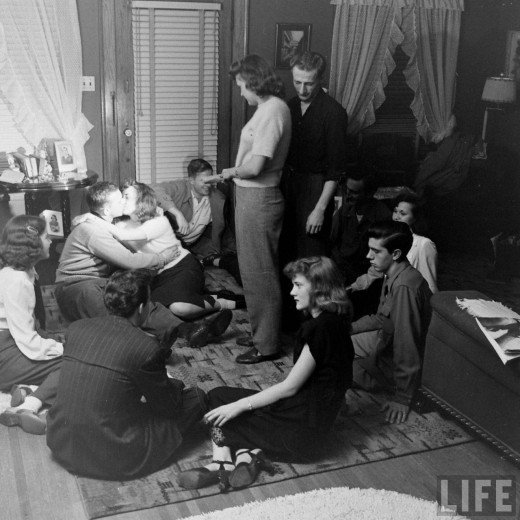
I planned to title this post, “10 Reasons To Love Des Moines” and I was going to include things like, “The capitol building is pretty” and “The cost of living is low” and “Two words: BUTTER COW.” But when I searched for a vintage postcard-style picture of Des Moines online, I found a LIFE photojournalism piece featuring Des Moines teenagers in 1947. And my plan went out the window.
Because. Well.
That ruht thur’s a kissin’ party.
And:
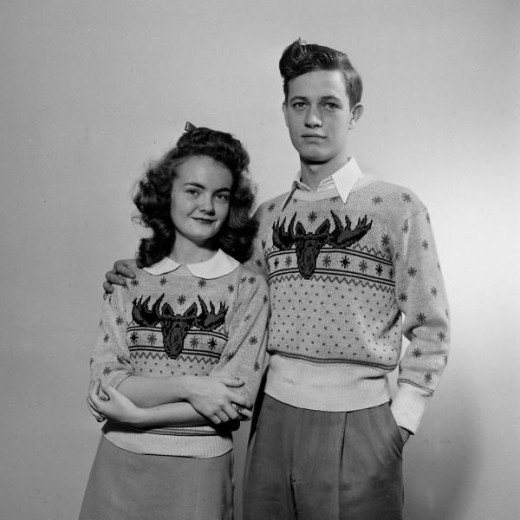
I know them. (They actually live in Wicker Park. Shh!)
And of course:
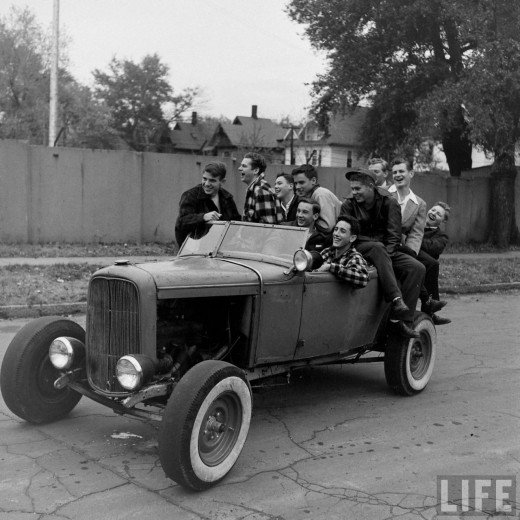
“Joyriding” = “Cruising” = “Rollin’” …There is nothing new under the sun.
My list was cut because nothing I could say about Des Moines could be better than looking at these photographs. There are twenty-one of them, and they depict the late 1940s, and they depict teenagers, and they communicate heterosexuality and good grooming, sure; they capture all these things and more.
They sure show Iowa. Des Moines. It does kinda look like that, like cars and boys and high schools and kissing parties; it looks like staring off into space, it looks like hiding something, it looks like black and white, sometimes, too. It stopped looking like home to me awhile ago, but it will always look familiar.
Visit scenic Des Moines, courtesy of LIFE, right here.
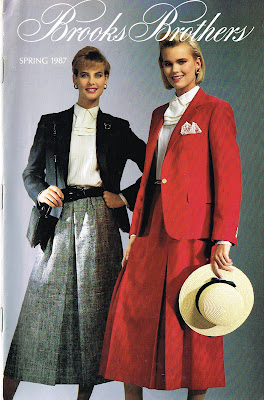
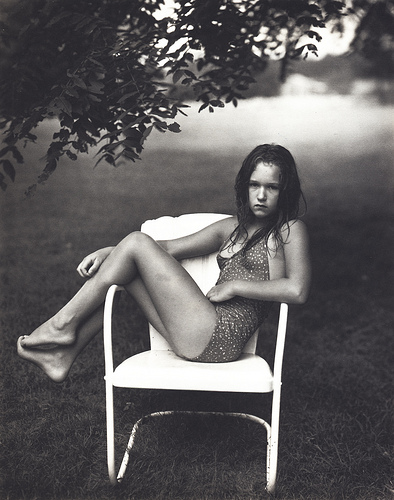
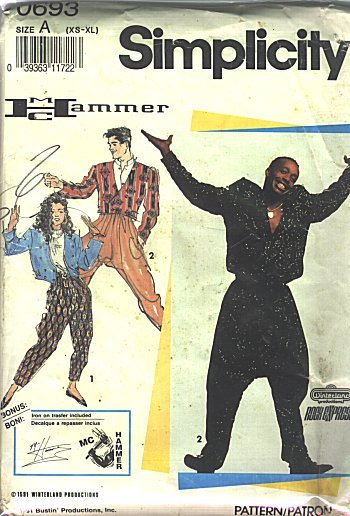
I would honestly purchase either one of these outfits.
So a girl walks into a Brooks Brothers store in Des Moines, IA.
I was looking for a black turtleneck. I’m here filming the PBS show and I needed a black turtleneck. I wanted it to be thin enough to wear under a jacket and nothing that would look like poo after two washes. Des Moines is many things; fashion mecca is not one of them. But there’s a serviceable Brooks Brothers store in a mall on the west side of town, so I paid it a visit yesterday.
Wouldn’t you know it, bam, right there on a table, the exact item I was after. A lucky day. To congratulate myself on something I had nothing to do with and to pay my respects to the Msrs. Brooks, I thought I’d try on the darling jumper I saw in the window. A kind, 50-something fellow with a sibilant “s” helped me to the dressing room.
I came out to examine things in the three-way mirror; I liked the dress very much, but I had an undergarment issue. The brassiere I had on yesterday was not proper for it, but I could see with the right one, the outfit was positively dishy. The clerk came into the fitting room area and gave me an encouraging nod.
“Oh, that’s nice!”
“Well, thanks,” I said, eyeing the shoulders. “I like it, too. I do need a different bra with it, but it’s great.”
“Woah!” he said, “TMI!”
In case you are reading this post from your home under a rock, “TMI” is short for “too much information.” It’s become a noun. Example: your officemate tells you his hemorrhoids are flaring. This is “a TMI.” Another example: your mother tells you, “Your dad was all over me last night, honey! What a naughty boy he is, sometimes!” This is a TMI.
But I ask you: Is a fitting room attendant or retail clerk in a clothing store receiving too much information when a customer remarks that with the right foundation garment, the item of clothing she’s considering will be fabulous? For your consideration, I offer what I believe would have been TMI’s in the fitting room of Brooks Brothers yesterday:
TMI No. 1: “My breasts are swollen, but when they aren’t, this jumper will be great.”
TMI No. 2: “I’m a pig. I’m a pig and I hate myself. I ate an entire cheesecake last night. God! My husband is such a [redacted]! I hate him. I hate him and I hate myself. This is cute, though.”
TMI No. 3: “Is this eczema or something else?”
I have a friend whose favorite food group is ice cream. It’s no use pointing out to him that ice cream is not considered a real food group. He has no need for guidelines he had nothing to do with. In the world of my friend, ice cream is a food group and that, he would say with a mouthful of rum raisin, is that.
Iowa is hot today. Earlier in the week, it was hotter still; the temperature reached to triple digits. Whenever the temperature hits that high anywhere, I feel intensely depressed. I picture stifling attics, air conditioners that blow engine block heat, and days that don’t end when the sun goes down. It’s not that hot now, but I walked around the town square today and the word “scorched earth” kept pounding in my temple. When your skin is mad at you, the weather sucks.
Ice cream helps.
Summer is over — another guideline none of us had anything to do with — but it ain’t autumn for awhile. Pull out some ice cream. It’s Friday night! Smooth some mint chip on your tongue. Lick a twist cone. Suck melting vanilla off a pralined pecan. Take out a pint of strawberry — pure, simple strawberry — and go sit outside somewhere. Focus on it.
If you’re eating with a metal spoon, when you’re done with your ice cream, lick your spoon clean and press the back of it right between your eyes. It’ll feel cool on your skin. A little sticky, sure, but no stickier than the day itself.
I’ll bet you did three things well this summer, big or small, at home, at work, or out in the world. Think about those things while the cicadas or the skyscraper air units whirr. Ice cream is a food group and summer isn’t over till you say so.
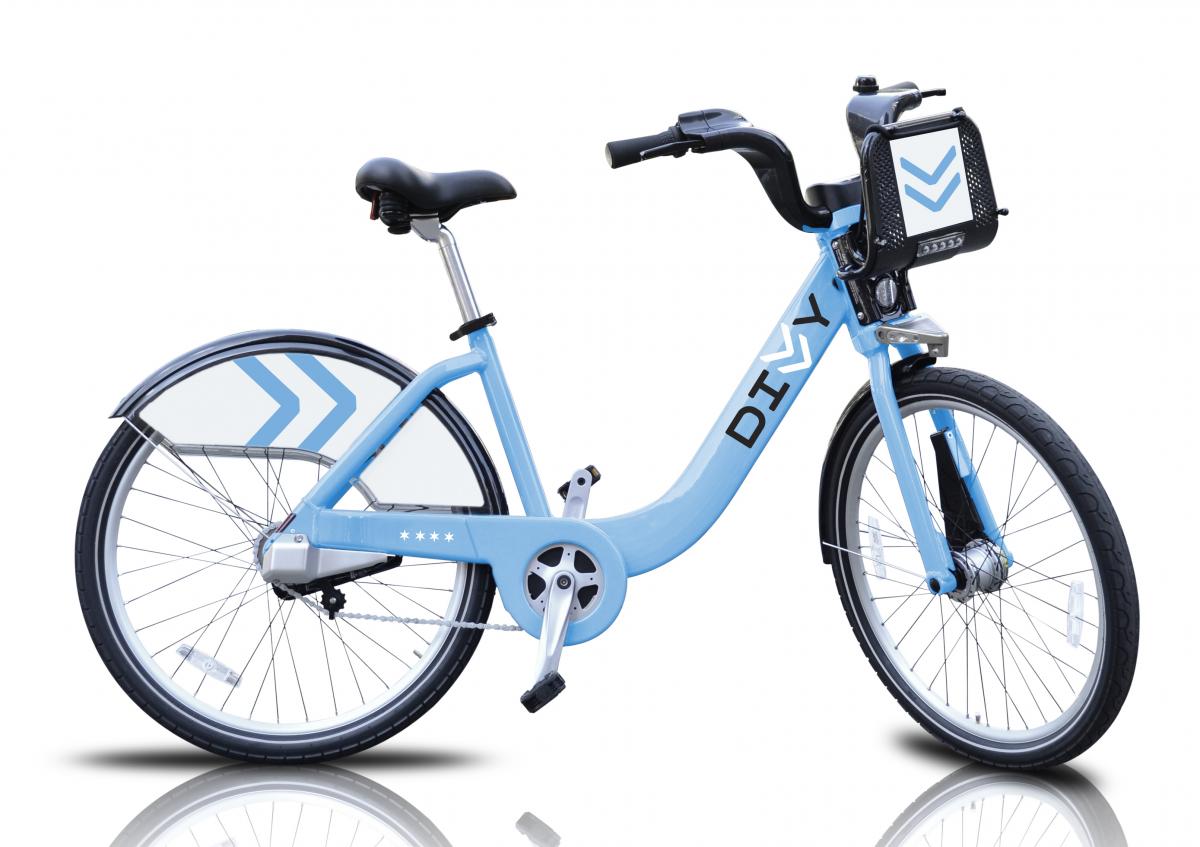
It’s been this way for awhile. Now the city has a bike-sharing program and I’m more hopelessly in love than ever. Meet le Divvy.
I’ve tried to write a poem, a paean, to my town many times. I’ve started poem after poem — entitled, of course, “Chicago” — and I fail horribly every time. It’s simply too difficult to express my feelings on the greatness of this city. I mean, Nelson Algren and Simone de Beauvoir went on dates here. Together. And she was cheating on Sartre with him! They like, had a beer at the Green Mill. I’m paralyzed. Every line I attempt is a fart in the wind. I know my place. I’ll just keep reading books, maybe.
Let’s get back to that bike up there.
Chicago has implemented a bike-sharing system. There are banks of bikes all around the city. You pay a yearly membership ($75) to get a fancy square key and then you can ride the bikes. All the bikes. Whenever. You punch in a code to unlock a bike at Street A. You ride your bike (a gorgeous and hearty and smooth bike) to Street B, find a dock where you can lock it back up, and bam. Welcome to your life.
I didn’t jump on a Divvy right away. After all, I have a bike of my own, and what if I looked dorky or something? (I told you — my brain is full of farts.) But the moment I got on my first Divvy, I was hooked. More than that. I was mega-hooked. Let me tell you what freedom is, comrades: walking to a bike, unlocking a bike, riding a bike, getting off a bike, walking to your door and NEVER THINKING OF THAT BIKE AGAIN. It’s like I was taken to my destination by angels. It’s as though I had wee winged feet.
Anyway, thanks Chicago. I love you. I will ride your bikes. I will still love my favorite bus lines and you can’t be the Brown Line on a rainy day in the Loop. But those blue bikes are the best idea you’ve had since Millennium Park and we all know how that turned out.
These boots arrived as I was leaving Thursday. As I walked out the front door of my building, the UPS gal walked in. She had a large box with my name on it. I knew what it was.
“Thankyouveddymuch,” I said, and signed for it.
I set the box in the back seat and hit the road. As I sped north to Door County, I periodically looked at the box over my shoulder, the way a mother checks up on a baby in a car seat. I adjusted the rearview mirror a few times over the course of my five-hour trip, looking back to beam at the box. I had been anticipating these boots for many moons.
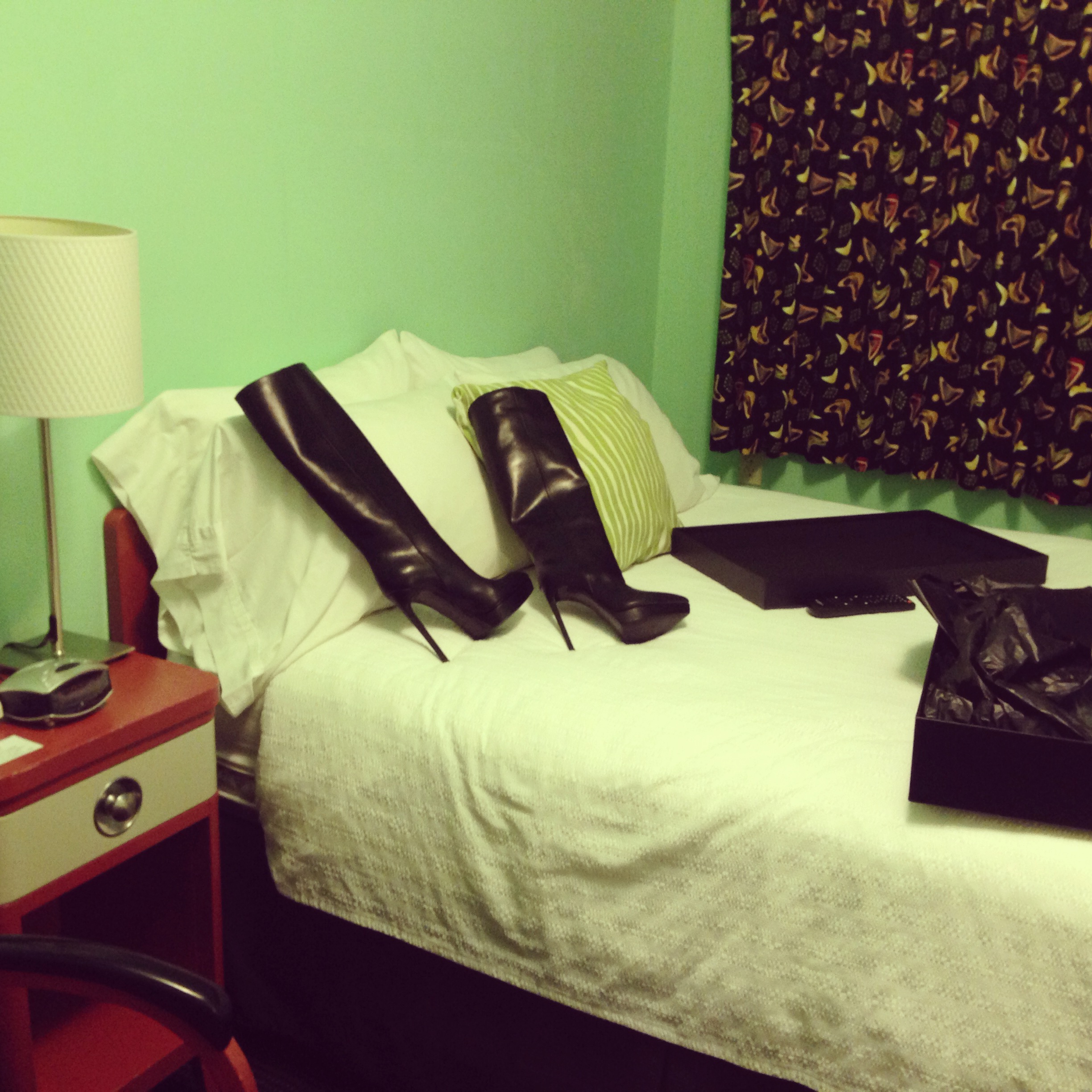
My final destination would be our family’s cottage, but I wouldn’t be able to make it there that night, so I had a reservation at the Holiday Music Motel, my favorite place to spend the night outside of the Ritz Carlton in Paris (I’ve never been there.) The Holiday Music is clean, adorable, and affordable, and they have great coffee, cozy linens, and have somehow managed to do retro decor well. Not easy.
When I got to the motel, I checked in and like a badger with a sandwich, I tore into the box. Tissue paper went flying. Plastic was tossed. The black Saint Laurent box nearly glowed. I pulled the boots from the pretty cloth bag and sighed a deeply contented sigh. They’re better than I even hoped and they fit perfectly.
The word “incongruous” means “not in harmony or keeping with the surroundings or other aspects of something.” Those boots looked so out of place in the Holiday Music Motel that they entered into a kind of zen belonging. Delicious.
I was traveling alone, but that night, I had two bedfellows: the right shoe and the left one.
Rogers & Hammerstein considered “Rhode Island!” initially. Little known fact that I just made up.
I saw Oklahoma! a few months ago. First time. The Lyric Opera in Chicago had put up a critically-acclaimed production of it, so one rainy night in May I slapped on a raincoat and braved the downpour in the name of art. I was quite wet when I arrived. Could I have possibly cared less about my wet feet when the lights went down and the story began?
The critics were right to be acclaiming all over themselves. The Lyric’s production was lush and bright; it clipped right along but allowed space for the moments that needed it. Aside from one actor that I remember not caring for particularly (one I cannot even recall now, so it must not’ve been that bad) the casting was pitch perfect — for a musical, obviously, this is especially important. But what delighted me the most was the musical itself — the melodies, the lyrics, the heart of the thing. Indeed, that is the highest compliment one can pay a production: that the presentation allowed the work to be seen at its most honest, in its purest state. The show got out of the way of the show, if that makes sense.
Have you heard “Surrey With The Fringe On Top” lately? Allow me, please, to share a few lyrics. A surrey, by the way, is a horse-drawn two-seater carriage, and the circumstances here are simple: Curly is trying to woo Laurey into going to a dance with him, so he’s boasting about his tricked-out ride. Now, you tell me if this don’t melt your heart:
“All the world’ll fly in a flurry
When I take you out in the surrey,
When I take you out in the surrey with the fringe on top!
When we hit that road, hell fer leather,
Cats and dogs’ll dance in the heather,
Birds and frogs’ll sing all together and the toads will hop!
The wind’ll whistle as we rattle along,
The cows’ll moo in the clover,
The river will ripple out a whispered song,
And whisper it over and over:”
You gotta be kiddin’ me. Cats and dogs dancing in the heather? Have you ever heard anything more darling in your entire life? Oh, right, you have. In the next line of the song when the birds and frogs start singing together and toads are hopping everywhere. And then the cows in the clover are mooing and lowing and everyone’s in love and good heavens! I was a goner, crying about the damned cats and dogs in the heather and then Rodgers & Hammerstein go and hit me with the last verse, all ritardando and legato and sotto voce :
“I can feel the day gettin’ older,
Feel a sleepy head near my shoulder,
Noddin’, droopin’ close to my shoulder, till it falls — kerplop!
The sun is swimmin’ on the rim of a hill;
The moon is takin’ a header,
And jist as I’m thinkin’ all the earth is still,
A lark’ll wake up in the medder.
Hush, you bird, my baby’s a-sleepin’!
Maybe got a dream worth a-keepin’
Whoa! you team, and jist keep a-creepin’ at a slow clip-clop.
Don’t you hurry…with the surrey…with the fringe on the top!
I’ll tell ya this much: if I ever find myself riding through a meadow, resting my head on my man’s shoulder and he starts telling birds to “hush” ’cause his baby might be having a nice dream, well, that man will get a big, fat, blue ribbon from me. He’ll get a big ol’ kiss, too. Why, he’ll get all kinds of nice things.
Thank you, Lyric Opera of Chicago. Thank you Messieurs Rodgers and Hammerstein. If you have a moment, I beseech you:
From my one-woman show, “Performing Tonight: Liza Minnelli’s Daughter” in 2011.
I’ve stepped to a few mics in my day. I suspect I’ll step to a few more. I consider myself a writer and performer working in the quilt industry. Today, I write plenty, but most of it is within the sphere of the American quilt industry. And I perform in the same industry, as well; being in front of the camera is performing, even as you try hard to just be natural.
But in Mary B.Q. (“Before Quilts”) I wrote scripts for media companies, education companies, syndicated content. I wrote marketing plans and white board papers. Those were less fun than the tons of book content I wrote for a publishing company that makes books on things like dog facts, the United States, and The Top Ten Haunted Houses in America. It was a decent gig; I learned an astonishing number of random facts that slipped into the slurry of factoids sloshing around in my head, likely never to be retrieved again. What do bloodhounds and poodles have in common? Ask someone else because I have no idea.
The performance part of my life before quilting took over involved slam poetry in the beginning and evolved into performance art eventually, mostly with the Neo-Futurists here in Chicago. The Neo-Futurists are an ensemble of rare creative types who are slightly weird and head-slappingly talented; if you know Chicago, you know of the Neos. I was extremely fortunate to win a place in the ensemble and perform and tour with the Neos for nearly six years. (I’ll tell you more about the Neos someday.) I have been grateful to be invited to share work at many “live lit” events in Chicago and that still happens with fair frequency. So yeah, I’m a performer.
Clearly, I’m still writing — and the ol’ PG is outside of the quilt world, even with a post here and there regarding quilt-related work. I write all the time on my own, too. But I don’t get to step to an actual microphone as often as I’d like. There’s nothing like a mic stand, a mic, and a sound system. So simple. Elegant. Just a stick and a prayer, you know? Sound waves and things. I love standing behind a mic and sometimes, when I’m giving a lecture at an actual lectern, with a podium that separates me from the audience with that big block of wood, I miss the other part of me that doesn’t need (or want) to have any barriers up there.
Maybe I should just buy one and keep it in my house.
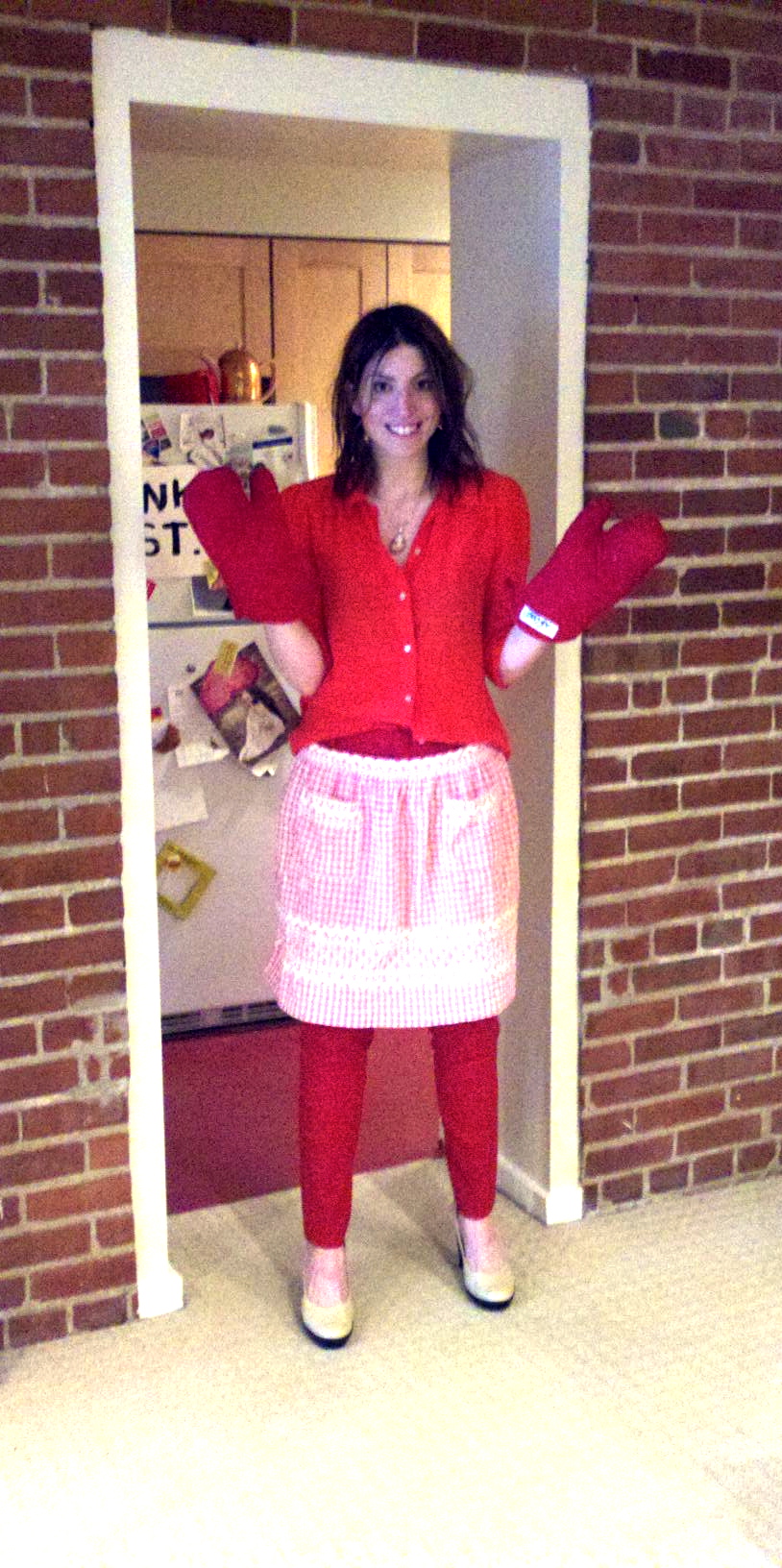
One night, not so long ago and definitely in this galaxy, I had on red pants and a red shirt. That night, I made dinner, which necessitated me putting on oven mitts. They were also red. They still are!
I felt like a lobster. So I began to sing a little song, which I do when I’m happy. If I’m singing, you know I’m happy. My little song went like this:
I read it my sophomore year in college, not for a class, but for — I was going to say “for fun,” but “fun” is not a word a person employs to describe a Lolita-ing. I read it because someone told me, not incorrectly, that Nabokov’s novel is the greatest of those written in the English language (usually in a dead heat with Ulysses) and undertaking it is non-negotiable for anyone wanting true human race citizenship. I cut through my foolishness (beer, flirting) long enough to get a copy, sit down, and be destroyed.
What is a masterpiece? For my money, I’d say a masterpiece happens because whomever we are and whenever we are, that masterwork of art affects us anew each time it presents itself. (Really, though, don’t we present ourselves to it?)
An example outside of literature: You see Water Lillies* when you are ten. You love Monet’s painting because it’s looks like so many pink dresses. You see Waterlilies at twenty-five and you hate it, because you’d much rather check out the Duchamp and the Dali, this being a dada and surreal time of life — your rejection is a choice; you have still been moved by the haunting painting. You see Waterlilies on a bad day after a hard rain in your thirties and you marvel at what those paintings did, how they were made, what it took, what it gave, etc. You buy a print when you are sixty. Your granddaughter loves it when you are long gone. She is eight, and it calms her down to look at it when she’s sad.
Two-bit, goofy cartoon characters don’t do this to people. Pulp romances don’t, either. This is the difference between art and everything else.
In the St. Louis airport yesterday, reading Lolita, I had a dim awareness of being an advertisement for the power of a great story. My surroundings disintegrated, washed out into the ether as the Haze house built up around me. Dolores ran past me on her colt legs and even I was in love with her, even I wanted to smell her “biscuity” smell. I physically shuddered when Humbert described himself as a spider; I audibly groaned twice, once when he unfurled a silky strand, again when he unfurled something else. I was in St. Louis, but I might have been in Kuala Lumpur for all the difference it made. The book is a spell.
I debated selecting a few sentences to share with you, a few rubies, but I can’t. Imagine sitting at a five-star restaurant and being placed with the best dish the house can make, some buttered, silky, foie-crunch-braised-foam fresh tower of artistry and then taking out a penknife to strip mine “a good part” for your dining companion.
Hell to the no. You’re just gonna have to read it, folks. You’re going to have to read Lolita, maybe again, maybe for the first time.
It’s been nice knowing you.
*Astonishingly, I selected this example at random, only to find when fact-checking that the series in Monet’s native French is entitled Nymphéas. The only truly Nabokovian stroke here and it was an accident. Great.
My stepdad is a retired commercial airline pilot. My sisters and I call him “The Cap’n.”
This man flew 747’s. He served in the military. He raised several children. He’s a grandfather. He knows how to play bridge, wallop my mom at Scrabble, read and comprehend an astonishing number of books in short order, and he recently reported that his golf game is “really getting there.” The Cap’n is clearly a capable person, which makes it all the funnier than he can’t seem to not lose his wallet, keys, cell phone, checkbook, etc., at least once a day. He’s done this for decades. I say it’s funny, but of course it’s not funny to him when he needs his checkbook, or to my mother, when she needs to turn on the car and go someplace.
This mostly harmless absentmindedness produced a big problem for my stepdad, however, with the arrival of the cell phone. (I understand that was awhile ago.) The Cap’n dutifully got a cell phone and over the ensuing years proceeded to lose it, replace it, forget about it entirely, get angry because it would ring at inopportune times and not ring when he needed it to, lose charge, get broken, become obsolete, etc., etc. When he eventually got an iPhone, he downloaded and printed the entire operator’s manual from the Internet so he could best use the new tool everyone was so nuts about. This is why I love him.
One fine day last week, The Cap’n took his iPhone out to the garage and smashed it with a hammer.
“I’m done with it,” he told my mother. “Done with the whole mess.”
He smashed his iPhone! With a hammer!
“What?!” I cried, when Mom told me. I was instantly mixed with feelings of shock and feelings of a deep, inexplicable happiness.
“He just hates having a cell phone,” Mom said. “He never liked having one. It really stressed him out. He’s much happier now.”
I spluttered, “But what about for travel, like when he’s in the car?” (Cell-phone manufacturers and mobile service providers surely have that question etched into the walls of their castles.)
“Oh, I suppose he’ll manage.”
Indeed, he will. We all will. We all did. Bravo, Cap’n. I am really proud of you. You took your happiness into your own hands. You fought the law and the law lost, big time. The whole Apple industrial complex was felled in one hammer blow and I adore you for it. You’ve got one less thing to lose, one less thing to manage, and you will never, ever have to turn your ringer on or off, ever again.
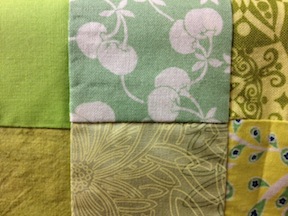
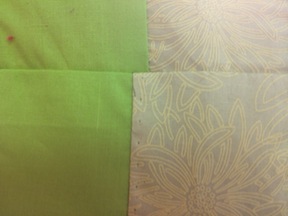
I whipped up a baby quilt top for the magazine to show in a Quilty magazine tutorial. “Whipped up” is a kind way to put it. “Threw it together on my way out the door” is a better way to put it. And I made some errors. No, really. Look:
Hm. Well…WOAH!!!
I taped it up in a box, mailed it to Iowa. A week or so later, I got this email from the Quilty managing editor, whom I adore:
“Hi Mary — We were getting ready for photography, and we noticed there were several places in the baby quilt top that you sent us that the seams don’t match up. While we are not trying to be the quilt police, we thought it was important to address this. We need to do very detailed shots of the quilt top and we can’t photograph it without showing the places that are not aligning. I can send it back to you if you are going to use it, just let me know.”
Oh yeah.
Here are a few things I think we can all take from this course of events.
1. Quilty (and all Fons & Porter titles) have high standards.
2. Just because you’ve made a passel of quilts, it doesn’t mean you don’t make mistakes.
3. Slow down, cowgirl.
4. COWGIRL! I SAID SLOW DOWN!
5. Be kind to yourself.
6. Were you drinking?
I’d like to expand on #5 for a moment. When this happened, I had a mini-meltdown. It wasn’t a crying, kicking, screaming meltdown, I just had a horrified look on my face, silently wept for about 3 minutes, and felt like an utter and complete failure. Too much? Well, considering it was my birthday and considering the fact that I teach quilting on national television, I think I reacted appropriately.
But after that, I couldn’t let it go of how dumb I felt. That seam? That’s like, really off. It wasn’t the only one. And I didn’t even notice. Sure, I had ninety things to do, but so does everyone else, and besides: I had thatparticular thing to do and I didn’t do it too well, did I? I felt like a sham. I felt like a fraud.
Several days later, when I was still hearing the word “fraud” in my head over and over, I finally did stop myself and say, “Self, this has gone on long enough. ‘Fraud’? No. Hasty? Absolutely. In need of some perspective? Without question.” It wasn’t an immediate turnaround, but over the course of the next few days, the stung subsided, mostly because I vowed to be nice to myself.
This post is not about vindicating my rejected baby quilt top. It absolutely should have been rejected. This post about vindicating yours.
I’m a writer/editor working in the quilt industry: I see a lot of quilts. I see quilts with problems, both in terms of workmanship and design. I see quilts that are technically flawless but utterly lack soul. I see quilts that would never make it onto the pages of a quilt magazine in a thousand years because frankly, they’re quilts only a mother (or a child) could want. These quilts are all made for a reason. Sometimes that reason is for fame and fortune, sometimes it’s for fun, and the majority of the time, it’s for love.
Look, I read the blogs. I watch the tempests swirl about modern vs. traditional, this sewlebrity vs. that one, the fans vs. the naysayers of the latest trend, latest winningest quilt. I most definitely see people going back and forth about technique. You’d think it was their very soul at stake, sometimes, and all anyone said was “squaring off.”
Release yourself.
If you’re going for publication or a job-job in the quilt industry, yes, you need to bring an A-game. But regardless of whether that’s a goal of yours, take the pressure off of yourself to be all things to all people, all the time. Maybe you’re more of a designer, not a blue-ribbon winner. Maybe every fabric combination you choose looks like the dog’s vomit, but MAN are you a crackerjack machine quilter. Can’t turn a binding that doesn’t look like it was chewed by your toddler? Well, fine, but your knack for solving Susie’s (and Joan’s and Polly’s) contrast problems make you the #1 go-to for such things while everyone else is scratching their heads.
Learn the craft. It’s more fun when you know how to do stuff well. Smart quilters say that again and again. I say it. But for heaven’s sake, be nice to yourself. I spent far, far too many hours in the dumps because I made one mistake and of course, I can’t make mistakes. Ever. Lemme tell you, learning to sew on national television was not easy and I thought I could weather any storm after that, but apparently, I can still be felled. And if the editor of a national quilting magazine can be rejected from time to time, you better not feel too bad about it, either, L’il Miss.
I’m misunderstood, you know. Really, I’m a dancer.
I never told anyone, never dared to admit it even to myself. I took dance classes at Debbie’s School of Dance as a kid, but those classes weren’t fun so I wasn’t particularly good at them. That made it seem that I was only an okay dancer, not a gifted one.
Now wait, wait: I’m no dance genius. Have you been to any city ballet company performance recently? watched a Beyonce video? Dancers are artists and they train their whole lives to be professionals. I wouldn’t insult them by saying I have some divine knowledge of their craft. But if you’re talking passion and creativity, I can say with conviction: I’m a dancin’-dancin’-dancin’-dancin’ machine that can match the best of ’em.
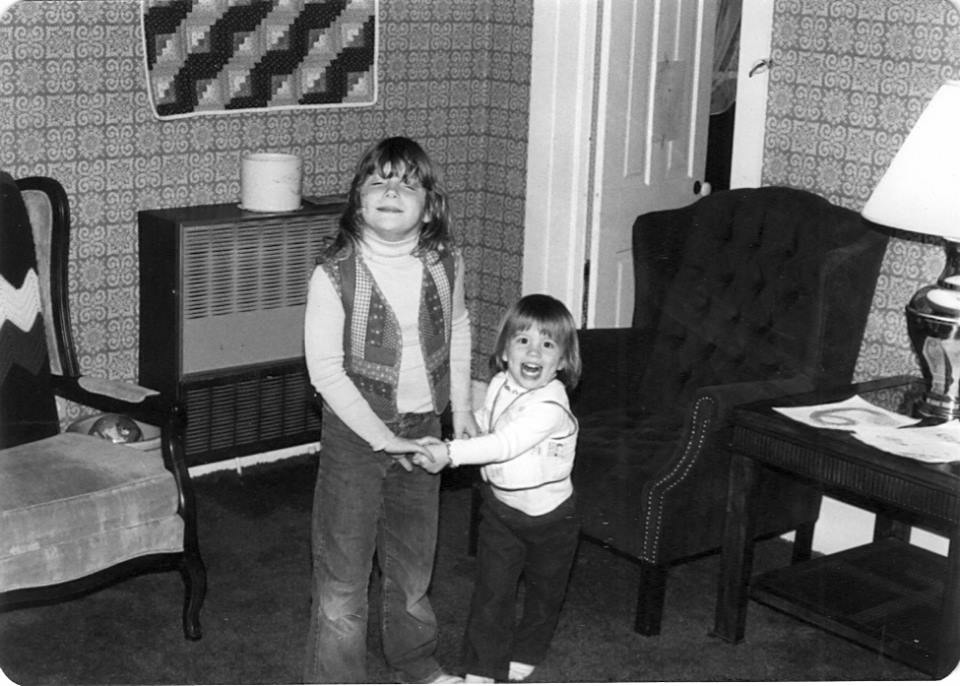
You know how I know? It’s because there is no other state in which I am more baseline happy than when I am dancing. Look how happy I am:
I’m the short one.
I’m dancing, as evidenced by the right foot step forward, there. My sister Nan is mugging for the camera and she’s clearly freaking adorable, but I’m actually not mugging. I’m just caught in a moment.
When I’m dancing (and I prefer good, crunchy remixes to pop music) and in the zone (which most assuredly does exist, a place between intense focus and stream-of-consciousness) I’m alive. I feel my vitality. It’s said that we don’t “have” a body, we are a body. When I’m dancing, I know this and embracing it feels as good as it felt to be with my sister back in that room on the farm in Iowa that day.
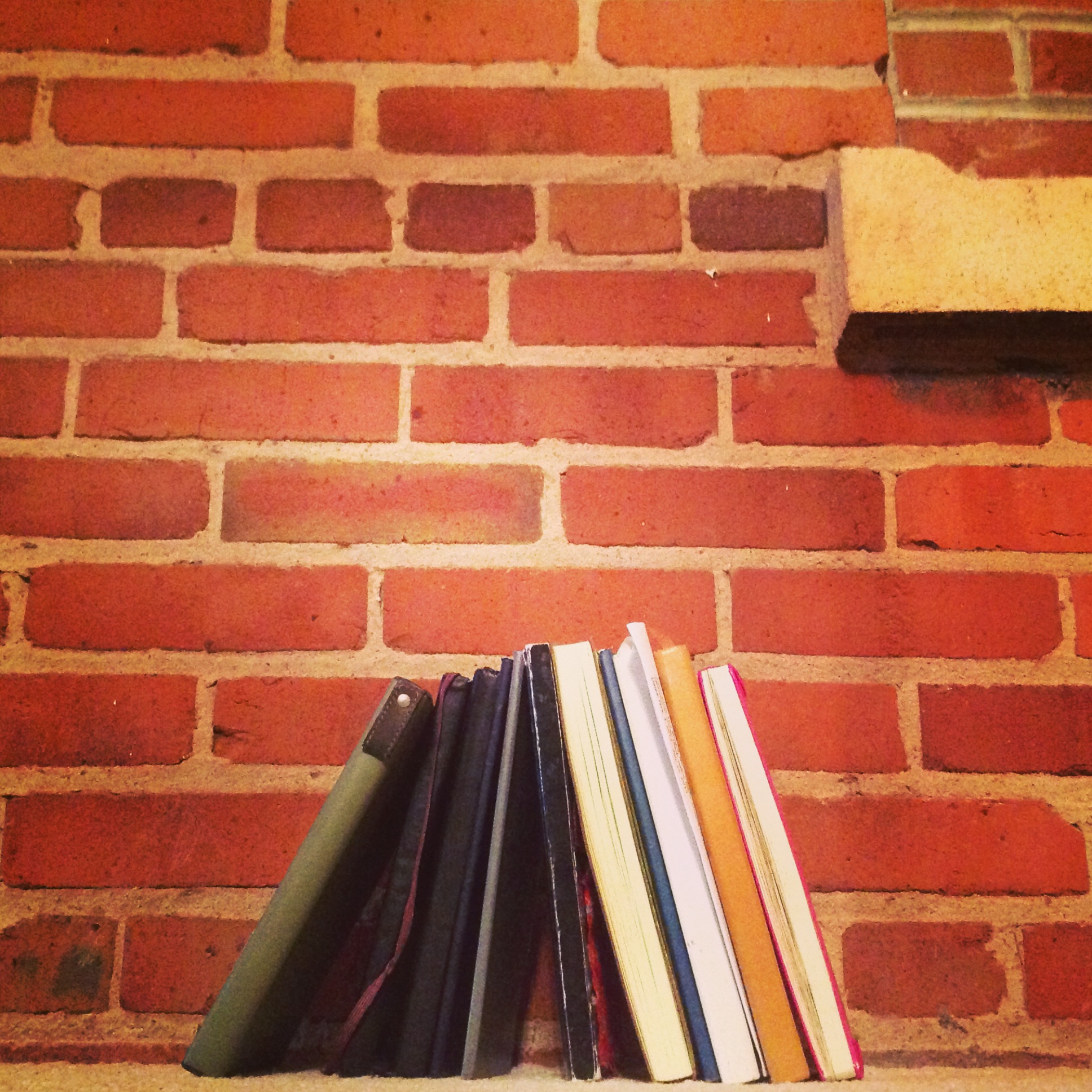
These books are diaries. I write in my diary every day, and this photo shows the pages kept from 2005 to this very morning.
“Juicy” comes to mind.
These pages (several thousand) are the offline journal, the log, as opposed to the blog; remember, the term “blog” was coined by combining the words “web” and “log,” sometime in the heady, early days of the Internet. I found myself wondering if “weboural” was ever considered, or “wiary,” which I like very much, since it accidentally creates a ubiquitous tech word like “wire.” Besides, “blog” sounds like a heave or an eruption. “She was so sick she blogged up the chicken she ate for dinner.”
Why do I write in a diary? Do you write in one? Why do you do it?
Occasionally, I speak to students about writing and when I do, I share this quote by American philosopher John Dewey:
“If you are deeply moved by some experience, write a letter to your grandmother. It will help you to better understand the experience, and it will bring great pleasure to your grandmother.”
That’s why I keep a diary. It’s why I write at all. Writing helps me to make sense of my life. If someone else is encouraged or entertained, then I have created value for my fellow man. To paraphrase Horace Mann: “Until you have done something significant for humanity, you should be ashamed to die.” I’m not suggesting my diaries are significant in any way, but they are an attempt, a wee flag waving.
They’re also extremely juicy. Like, juice bar juicy. Like all the juice bars in southern California juicy. Did I mention I’m a quilter? It’s an excellent front.
I had a summer fling. Perhaps I can say more about it but it’s too soon in about six different ways, so I won’t.
But my sweet cousin Micala came through Chicago with my mom and they stayed with me last night. When I lamented that the eternal flame had flickered out and that my summer fling was over, Micala encouraged me.
“Did you know Tina Turner is seventy-five and her boyfriend is forty-two? And Madonna is fifty-something and her boyfriend is like, in his twenties? So don’t worry. If you haven’t met the right guy, it’s probably because he hasn’t been born yet.”
Is there vodka? In the pantry? Great, great. Thanks.
I’m writing a series of poems about fruit. Each poem focuses on a single fruit, each written in a different style. Some are almost childishly simple — there are those among you who may remember Cantaloupe In Chorus — while others are more thinky, e.g., Pomergran, a commentary on faith vs. reason modeled after Lewis’ Jabberwocky. I’ll post that one day, too.
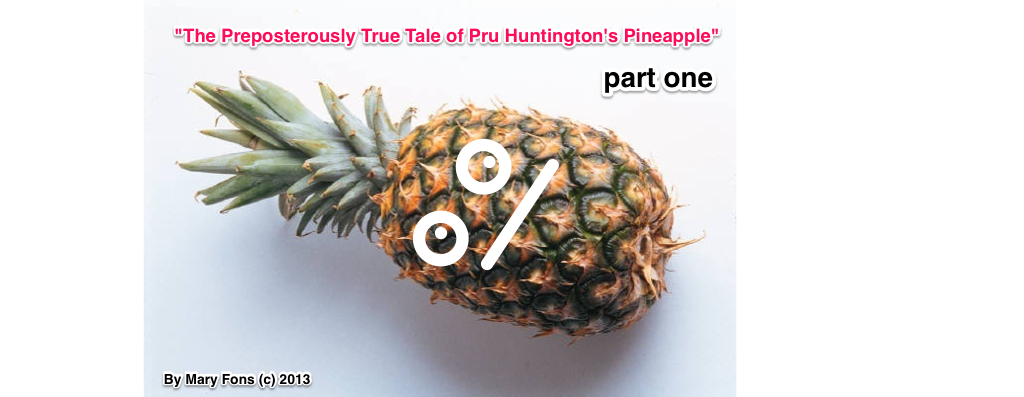
Right now, I’m working on a piece about pineapple and I am enjoying the heck out of this one. I’ve titled it The Preposterously True Tale of Pru Huntington’s Pineapple and as you read the first half of it, I recommend doing so aloud to get the meter right. Remember: there is a “grace note” of sorts that one can exploit in these things; I assure you, my meter has been tested and retested for accuracy.
ED. NOTE: Damn! My formatting didn’t make it into the WordPress quotation template. Forgive me; I know it’s wonky.
Oh, and one other thing: the second half takes a wild, utterly unexpected turn. It involves a song — not sung by any human…
“The pineapple’s here!” she cried, “Be a dear, Louisa, and go to the door?”
Pru stood, quite amazed, at the window and gazed at the fruit
She’d been waiting for.
Huge, golden yellow — the fruit service fellow had trouble just lifting it up;
“A centerpiece for the century,” Pru mused, “All the gentry
Will scarcely believe their good luck.”
The deliveryman soon was to stand in the foyer of Huntington House;
He was swiftly paid and excused by the maid, Louisa,
Who wore a silk blouse.
The party that night was the unmatched delight of the
in-the-know every December; A-listers all fought to be given a spot: On the guest list of VIP members.
The house was festooned (be-ribboned!) and bloomed with bouquets
stacked floor to the ceiling;
They spared no expense, decorating like this;
(The party, it gave Pru’s life meaning.)
Are you in the mood to hear of the food that awaited each last sparkly guest?
Delights for the eyes and stomach, no surprise,
(Worth making dear Prudence so stressed.)
Piled high on the tables inside the great room, the dishes,
they steamed and they bubbled;
Whatever you please, there were tureens of these,
A spread of deliciousness, doubled.
Racked lamb and partridge and baked ham to boot,
the butcher’s best efforts in meat,
Chicken with waffles, deep-fried falafels;
A trip ’round the world you could eat!
Dessert was a feat of sugar and cake, so heavy the table would droop;
Ice cream? Oh, please! There were dozens of these,
Get a bowl, get a spoon, get a scoop!
But in all of this bounty, a royal spot saved — centerstage,
surrounded by flowers —
It was for the pineapple — Pru’s precious pineapple!
No other food had the fruit’s powers.
Hospitality emblem, oh lighthouse of grace, rough from the stem to the stalk;
Its sweet, fleshy inner was relished at dinner
Throughout the grand Belle Époque.
Let’s turn to Pru, our esteemed hostess who,
at this moment was placing her prize
High on its stage, a fruit for the age,
The Missus had pride in her eyes.
At a quarter to eight, the guests had arrived
and swiftly bestowed with Champagne;
They drank up the stars as valets parked men’s cars,
And hung furs for Anne, for Elaine.
Mingling done, Pru and Barry appeared at the top of an ornate staircase;
And a “Hip-hip Hooray!” for King and Queen of the day,
He donned tuxedo, She — lace.
“Thank you, comrades,” Barry boomed from his post,
Pru so glad she could cry;
“And now let us dine and drink casks of good wine,
To the great room, for dinner is nigh.”
The oak doors were opened, the guests “Ooh’ed” and “Ahh-ed,”
“Tally ho! You’ve outdone yourselves,”
Said Silas The Barrister, then to Pru, to embarrass her:
“Did you hire an army of elves??”
Before they could eat, Pru had a brief speech
which she gave at the party each year;
She stood at the center, Pineapple Presenter,
Elocution loud enough they might hear:
“A pineapple means welcome, and hospitality, too; truly the Huntington way;
We wish you prosperity vis a vis this fruit rarity,
Now let’s all dine and be gay!”
Fair reader, I beg you: believe what I say just then, the party plot thickened —
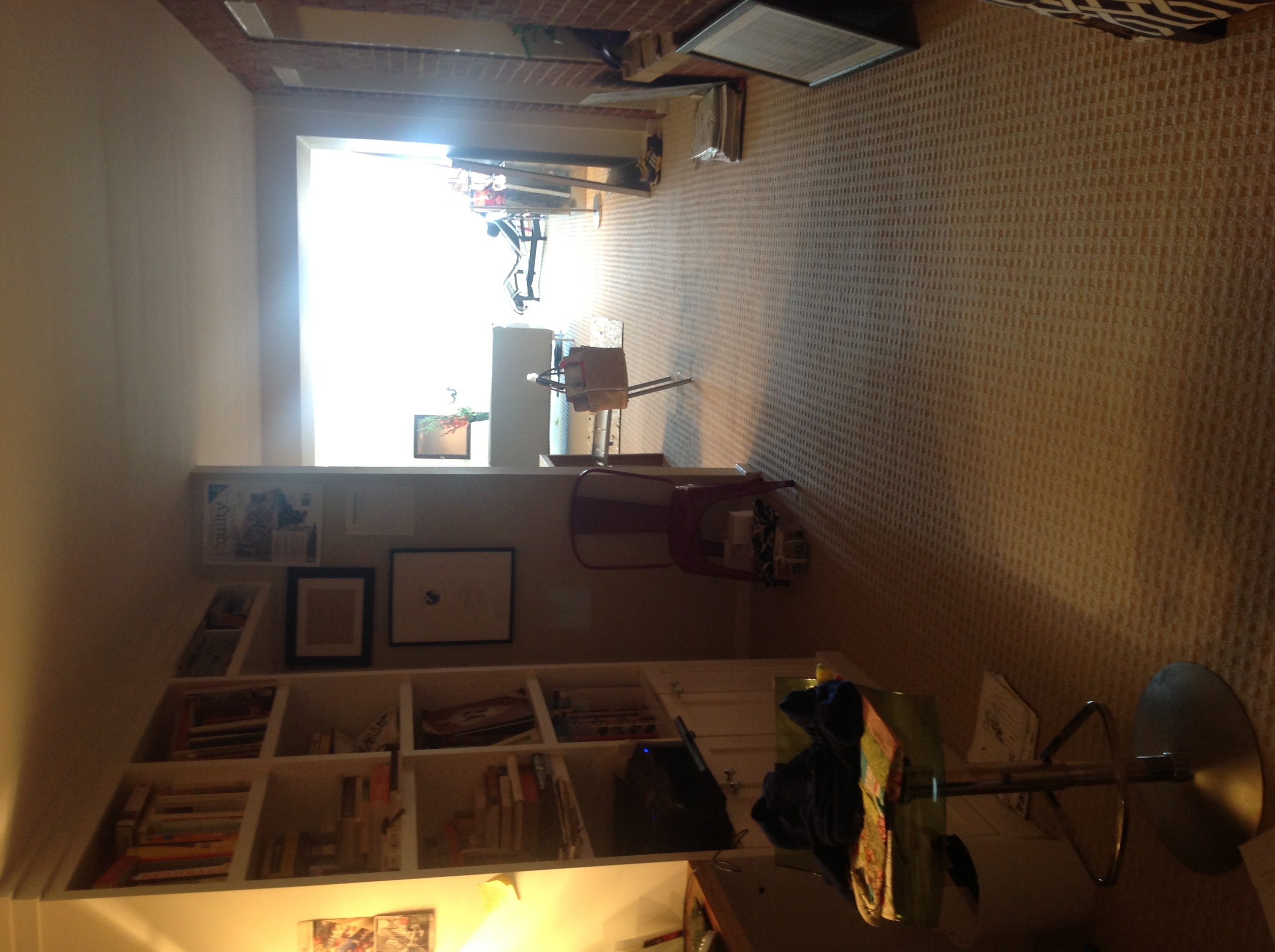
In my condo, there used to be an unusual hallway, a transition space from the front door area into the main room. It was too narrow to be a room room, but it was to large to skip over entirely. It posed a bit of a problem.
I work from home, and when I arrived in my place, I had two options: set up in the main room or take the guest bedroom over as my office. I did the latter for awhile, but then the show’s need for storage (I’m speaking about Quilty, here) and my need for natural light made this impossible. There’s no window in the back bedroom and it could work for boxes of fabric and notions but it wouldn’t work for my brain.
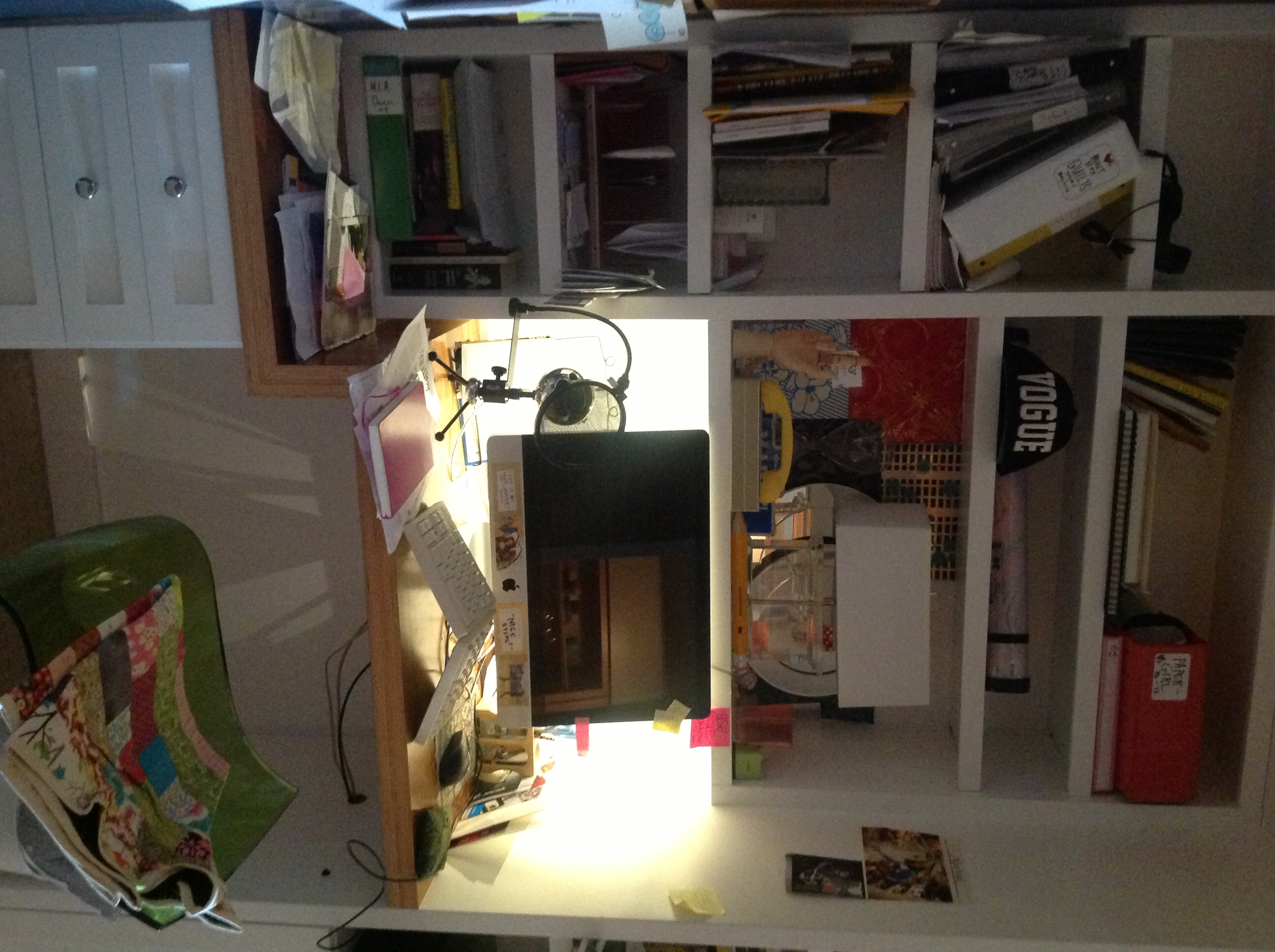
Then, one day, inspiration hit. The hallway. The office. The hallway office.
Fons Mission Control.
Forgive some of the small piles of paper and so forth; I tend to do that, but I assure you the piles have short lives.
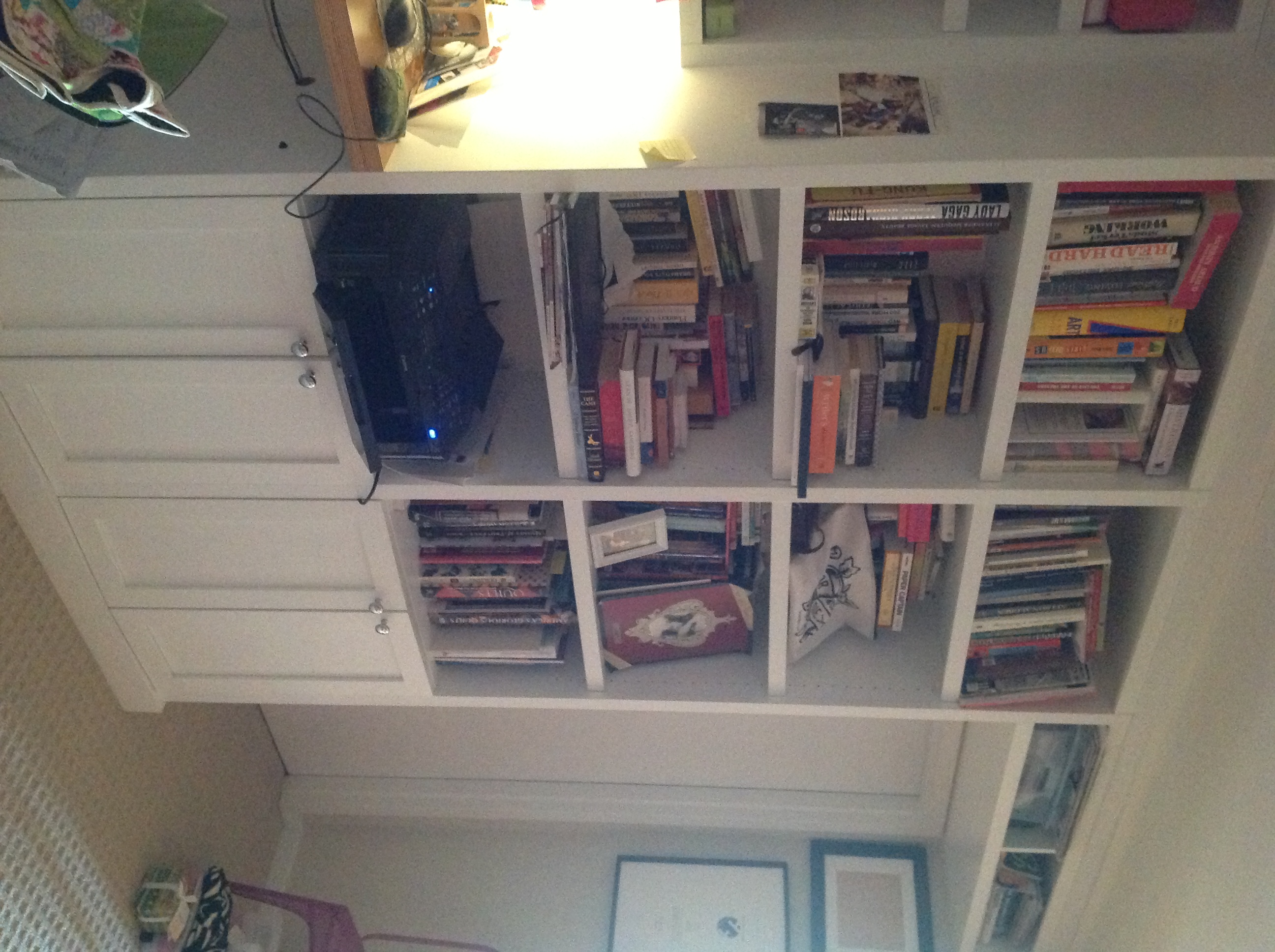
I think of my hallway office as my mission control, probably because it is. From the desktop, which I had placed high so that I would stand to work instead of sit (this happens less than I had imagined it would because: barstool), I make Quilty the show, edit the magazine, create the blog (!), the podcast (you’ll see), and write, write, write all sorts of things, including far too many emails.
There is no furniture I like better than a chair at a desk. A desk is a tool of the mind, a sign of civilization. Dogs don’t have desks. Gorillas don’t have desks. People have desks, and from our desks in palaces, bland office buildings, or reconfigured hallways, we produce.
*Note thinking cap on second center shelf. I actually wear it when I need to think hard about something. I also chew gum when I’m writing. Helps me focus.
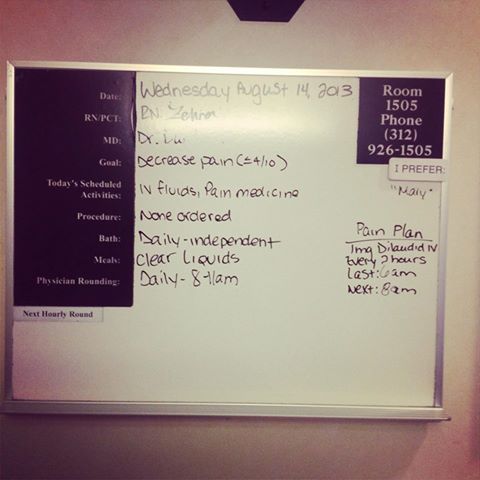
This was my view around 8pm Tuesday night, except the date read, “Tuesday, August 13, 2013”:
It would be so much better in neon.
My life is full of wonder and I often feel that I pay directly for it through physical suffering. Dazzled by the lights in the Chicago skyline every single time you look? For this awareness and understanding, you will pay…ah, yes. Keening in pain every so many days. Feel a surge of love for all humankind each time you board a plane and believe in the possibility of every individual, with compassion and without reservation? That’ll cost you…your colon.
Plenty of people have a beautiful life and don’t pay with their health, I realize. This is just my particular situation, my lot. And honestly, it’s okay. I’m okay with the trade. The good is just that good.
I’m home now, but haggard. More soon, and thanks to the well-wishers. The well fishers, well, it’s weird that you’ve been calling, but I’m glad you’ve been catching those fish.
They sorta look like they could bite you on the ankle.
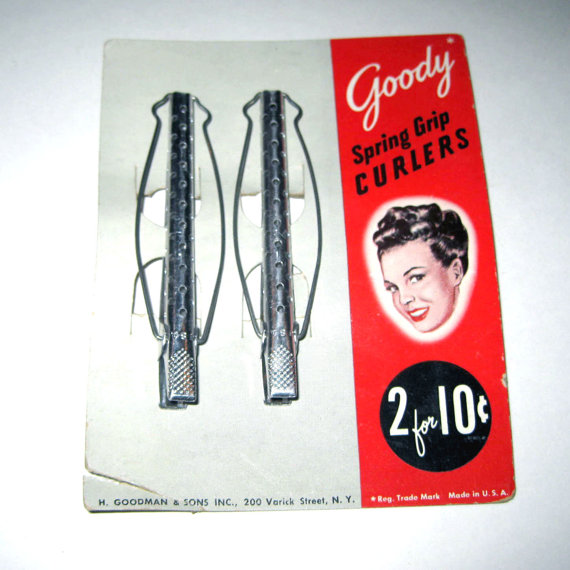
I needed to buy some barrettes the other day, so I went to my friendly neighborhood Target. I left with much more than barrettes, because that is Target’s evil way, but the barrettes were the most intellectually stimulating purchase — I just like Nutella; I don’t think about it.
In the barrette section within the hair section within the hairstyling section, there was a giant. And that giant was Goody. Heavens, the variety! Metal bobby pins, bobby pins colored like your hair, bobby pins made of silicone; barrettes with grippers, barrettes without, barrettes in neon colors, barrettes gray for the Woman of a Certain Age — and on and on. That’s not even approaching all the doo-dads (e.g., the StyleSpring), combs (e.g., teasing comb vs. compassionate comb) and the brushes (did you know there’s a brush now with toweling in it that dries your hair as you brush it?? America’s a heck of a country.)
When I got home, I had to look up Goody. I was stunned by just how many products for hair accessories one factory could make. I imagine the research and development team talking to the marketing team:
R&D: We’ve come up with something new.
MARKETING: Oh, no. (pause.) Okay, what is it?
R&D: It’s called “The Duck Tail.”
MARKETING: And what does that do?
R&D: (pause.) It gives you a duck tail.
MARKETING: Get Henry in here.
I got the name Henry from the Goody website. The origin of the company is interesting. Check it out:
At the turn of the century, Henry Goodman immigrated to the United States from the town of Gritsev in the Ukraine. With a single pushcart, he and his sons began selling rhinestone-studded hair combs on New York’s city streets. And in 1907, Goody was founded.
That’s pretty cool, isn’t it? Rhinestone hair combs from a pushcart. Think of all those lovely ladies in the early 1900s, haggling over the price of the combs, getting one down to a reasonable price of two cents from three. Remember what I said about America being a heck of a place? Goody is kinda proof. [Ed. note: I am not being paid to write this post.]
Oh, and the barrettes I got? They’re honestly the best barrettes I’ve ever used. 100% serious. They really grip and they don’t scratch.
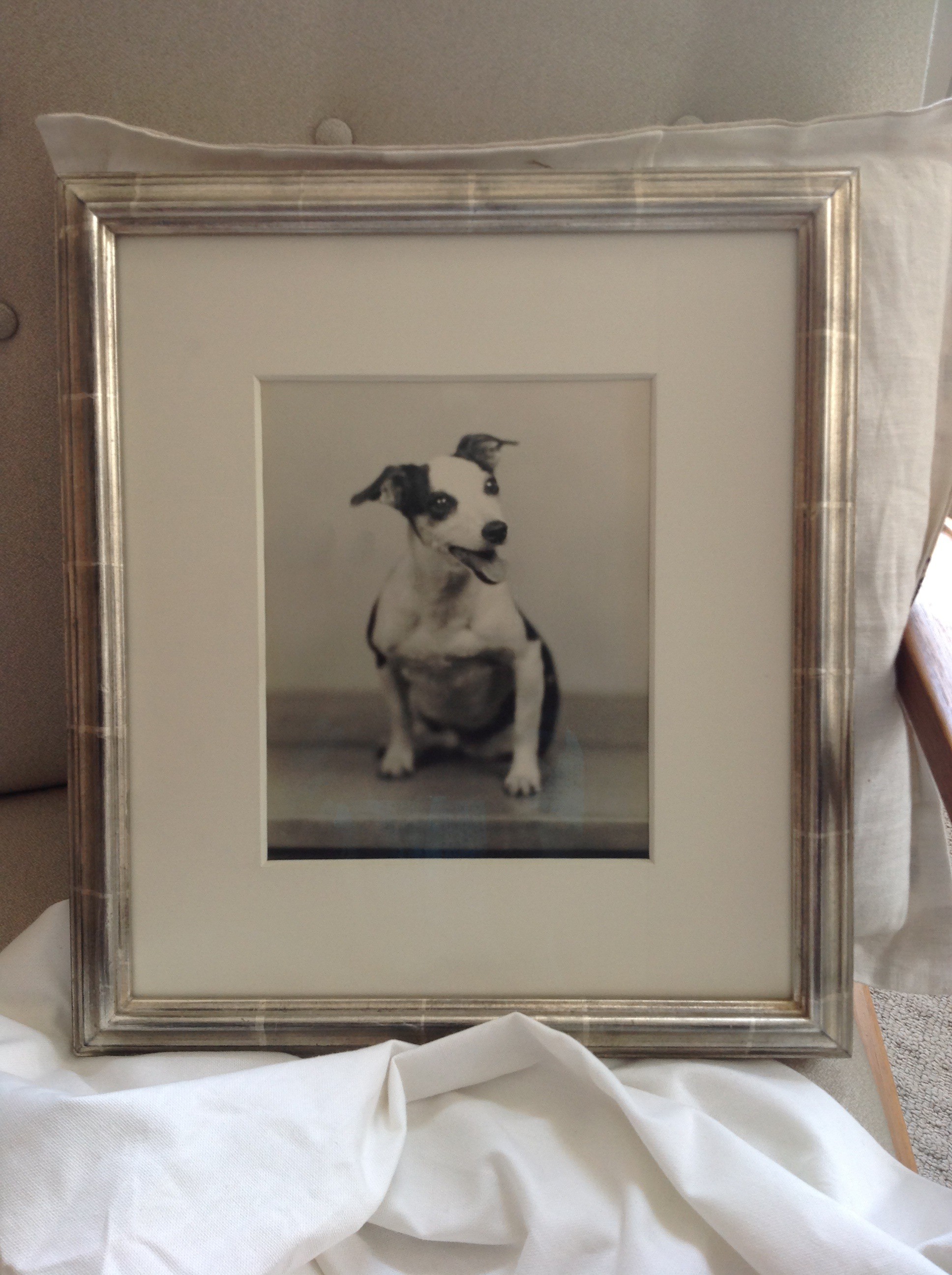
I found a photograph of a little doggie at a flea market. Wanna see him? Okay, here he is:
I got him for $25 dollars. As you can see, he was irresistible. The cock of the head, the sparkly eyes. He had to be mine. I thought for a second he might’ve been that famous 1930’s Hollywood dog, Asta. But he’s not. He’s just a little dog. What’s neat is that his picture was taken by a Chicago photography studio that no longer exists, somewhere up north. The name was stamped on the back. Abbot Photography, I think?
I spared no expense with the frame. I went to a trusted frame shop and did him right. I feel like I rescued him, which of course makes him “a rescue.” Now he’s home. He’s warm and dry, beloved and safe. Safe in the home of a woman who really needs him.
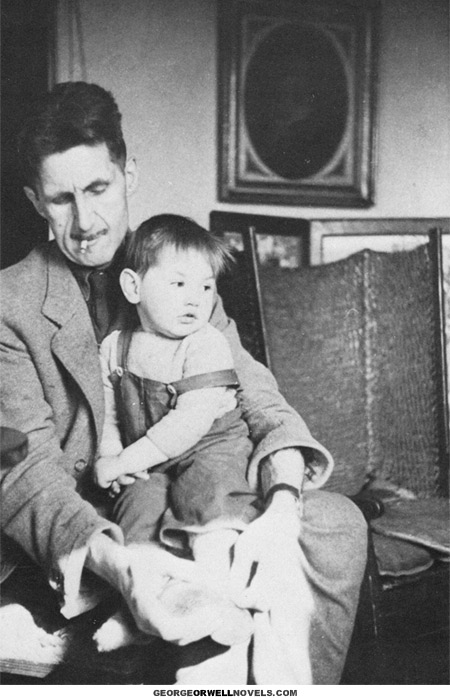
I named him after my favorite poet: Philip Larkin.
There’s a performance series in Chicago called “Salonathon.” It was founded several years ago by my friend Jane. She and I met at the University of Iowa and I will never forget the night we really became friends. We went to The Foxhead, a cozy Iowa City bar with a lot of small taxidermy and one large jukebox, and we drank some beers. I remember how the bond felt as it formed. It felt great; I knew I’d know Jane for a long time.
Jane curates Salonathon every other week. There are musicians, dancers, poets, comedians, performance artists, writers, and acts non-categorizable. I have had the pleasure of performing in the series numerous times. Each show has a theme, and this week, the theme was “Money.” I did a piece that went over quite well, so I thought I’d post it. If you’ve ever wanted to be a better writer and/or suffer less in regard to money, you’ll like it. I edited for language a bit; Salonathon is raucous; this blog, decorous.
(MARY stands at a microphone. She has Orwell’s rules written on big placards. When she gets to a new rule, she reveals the next placard. MARY may or may not be drinking Tanqueray as she performs this piece.)
I divide my life in two: the time before I discovered George Orwell’s six rules for effective, honest writing, and my life after.
Orwell’s rules work for speaking just as well as for writing, and the theme at Salonathon tonight is “money,” so this brief address is about money and how to better speak (or talk) about it.
Orwell says in his rules and elsewhere, that language matters. It doesn’t matter in the way the Grammar Police say it matters; “ain’t” is a word and has been a word for long time so ignore them; he means that when we write and when we speak, we make seismic choices that shape our faces and our days. And as we make and spend money, we make the same kinds of choices. So when we speak about money? Double whammy.
Orwell’s first rule:
i. “Never use a metaphor, simile, or other figure of speech which you are used to seeing in print.”
Here is what you are not allowed to say and never allowed to write, ever, ever again: money doesn’t grow on trees; money is the root of all evil; money isn’t everything; the best things in life are free; you can’t take it with you.
Let’s pull one of those out: “Money doesn’t grow on trees.” We know what the point is. The point, is that to survive in the jungle, even though it looks like a fairly cushy jungle when you’re raised like most of us here tonight were raised, the earth is a vicious animal. You take away the skyscrapers and the iPhones and the streetlights and you’ve got a thankless prairie under your feet and some hardscrabbling to do, comrades.
We have to eek out a living while we’re alive. We gotta eat. We have to find shelter. It’s deadly serious. Plus, we’re wired to make more of our species. These are our charges as humans. So when you’re headed to work and you hate your work, rather than making it worse by muttering the phrase, “Welp, money doesn’t grow on trees,” say – or just think – “I am earning a living. I gotta eat. I need shelter.” And maybe work will seem more important, less magically crappy than when you say tired, cliched phrases over and over. They don’t help you.
ii. “Never use a long word where a short one will do.”
“The members of the Board of Governors and the Reserve Bank presidents foresee an implicit strengthening of activity after the current rebalancing is over, although the central tendency of their individual forecasts for real GDP still shows a substantial slowdown, on balance, for the year as a whole.”
That gush of Fedspeak comes courtesy of Alan Greenspan, during some godawful testimony from some Fed monetary policy report to Congress in 2001.
It means nothing. Language like that is engineered to mean nothing. It’s a card trick. Words and phrases like foresee implicit strengthening and central tendency of individual forecasts, these are the hand you’re watching here while the other hand takes your wallet over there and yes, that’s literal. Taxes come out of your wallet; Greenspan was talking, ultimately, about how much of the money you made today will be removed from your wallet. Reject this language. Do a close read, if you can stay awake — you must fight to stay awake! — and translate. It’s very hard to tell what he meant. But I think that phrase meant: “The money forecasters say the GDP is still bad, but after the budget is balanced, it will get better.”
iii. “If it is possible to cut a word out, always cut it out.”
Let’s say [SELECTED AUDIENCE MEMBER] here is going to have trouble paying her rent this month. She’s got two ways to handle the call to her management company/landlord.
Option 1: “Hi, um, I’m calling to, well, it’s… It’s kind of a, an uncomfortable thing, but I am in a bind with my car. It is in need of some really crazy expensive repairs and without it, I can’t get to work because I can’t take the bus to work, because I work in the burbs three days a week. And I need to have the car repaired before Monday – it’s in the shop now – and for rent this month, I can pay it, but I can’t pay it till I know how much the car will be, the repairs. So it might not be that much, but it might be, I don’t know. So I’m hoping, I mean, if it’s okay, that I can pay my rent by the middle of the month? I know, I know, there’s a fee, it’s not the best, but I kind of can’t… You know, I don’t see… You know, it’s just, well, it’s just hard to see how I can do both and I need to like, figure that out.
Option 2:
“Hello, this [AUDIENCE MEMBER]. My rent will be late. I’ll include the $25.00 late fee when I drop it off. Thank you, goodbye.”
Dignity. Dignity, [AUDIENCE MEMBER]! It’s your money. It’s your language.
iv. “Never use the passive where you can use the active.”
What’s interesting about [AUD. MEMB] is that she lied about the car. When she gets off the phone with the management company, we hear the truth. And Orwell doesn’t say anything about not lying, so it must be okay as long as its in the active voice. Instead of saying to her roommate,
“I have spent all my money because I have gone shoe shopping.”
say:
“The money is gone. I spent it on shoes.”
And then get on with your life. Enjoy the shoes. They’re fabulous!
v. “Never use a foreign phrase, a scientific word, or a jargon word if you can think of an everyday English equivalent.”
News anchors, “financial correspondents,” and radio talk show hosts like foreign phrases because they sound fancy, but they are rarely used for any reason other than to make the news anchor or “financial correspondent” sound fancy or to avoid facing the truth. Example:
“The work was done pro bono.”
No, the work was done for free. Ah, but “free” scares people. You’re a lawyer who does something pro bono, you’re still kind of a scary lawyer. You’re a lawyer who admits to doing something for “free” and watch your email box erupt with people who want free legal advice. We hide behind foreign words ad nauseum. See what I did there?
I give you another (quick) example of this foreign phrasing that is garbage: caveat emptor, “let the buyer beware.”
“This drug is not tested.” “This toy has caused choking death in fourteen infants.” “Our lemonade is made with organic cow pee.”
Caveat emptor? Perhaps “run” is more to the point.
* * *
I hope I haven’t sounded pedantic.
The day I read Orwell’s rules, my life changed because my language changed. I’ve spent a good deal of time over the past few years not just “trying to earn a living,” but trying to earn a living that I love. Since the kind of living I love takes a fair amount of money – I’m a shoe person, too, [AUD. MEMB] — I have made choices that have led me to increased income and I continue to make those choices. I have important contract business beginning soon that will span the next few months and all this begins on Monday, when two Important People people will fly into Chicago to for a marathon meeting with me. Briefcases will be involved. There’s a lot to talk about.
Look, the language that I use in that meeting will either a) benefit my livelihood b) keep me where I am, or c) cost me. Any tools of language that I posses must be primed and ready so that I can deploy them when I need to. My language will make all the difference.
Your language is your gun. Your language is your livelihood. Your language is your sex, it can be a drug, it is an integral part of the rock n’ roll we all love. Don’t get lazy. Make more good language and you will make more money.
Ah. Orwell’s final rule:
vi. “Break any of these rules sooner than say anything outright barbarous.
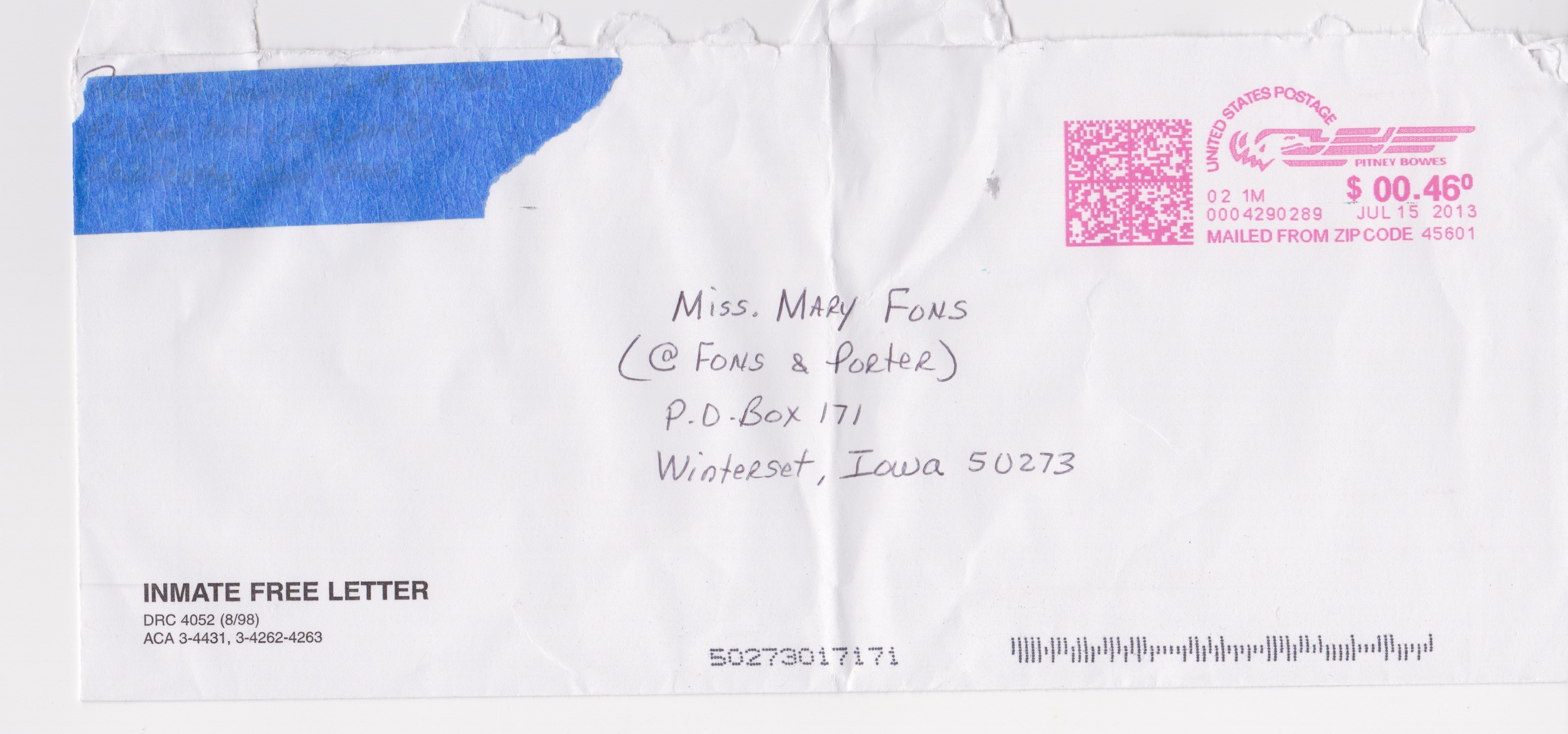
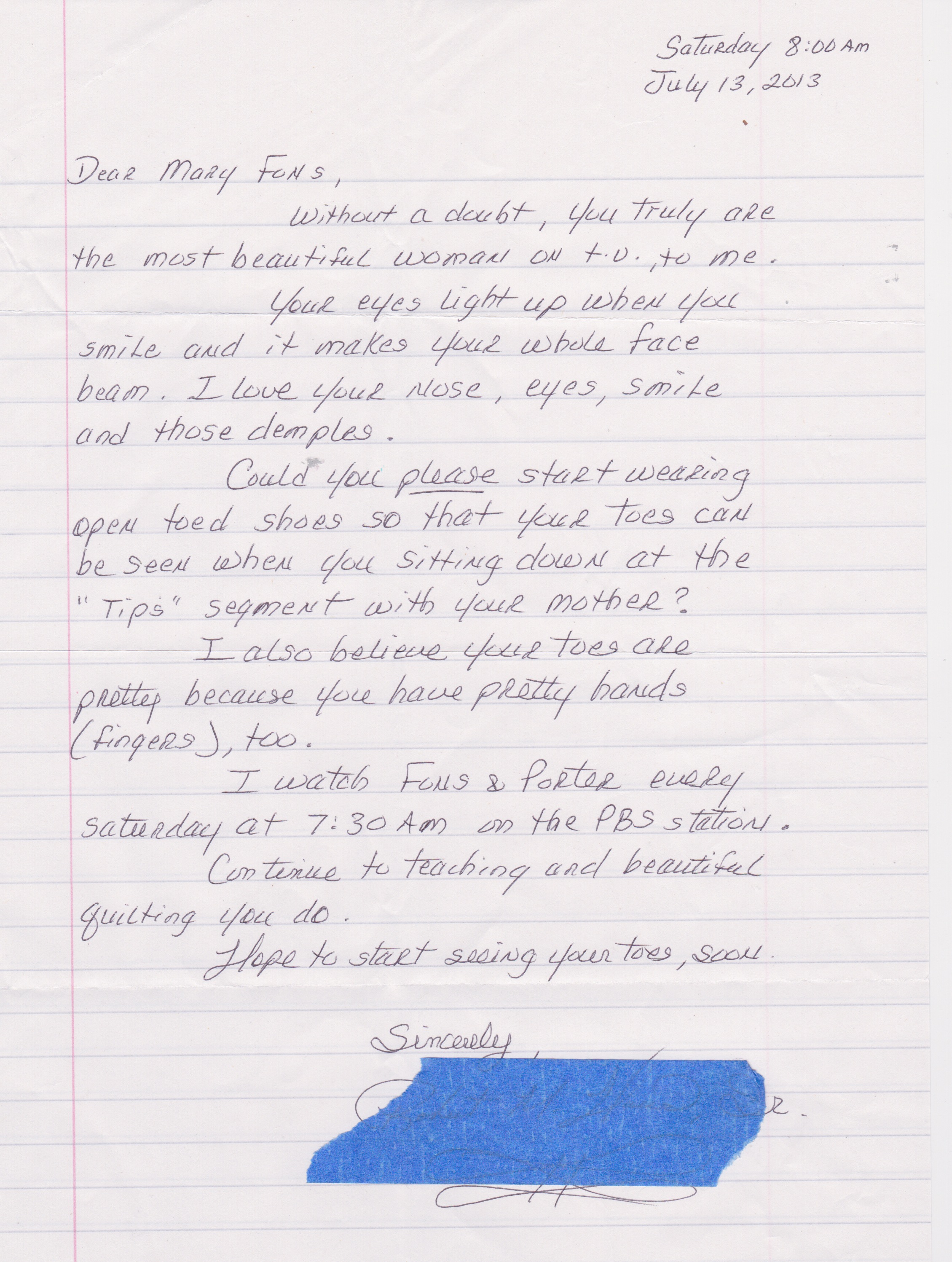
I am on TV, so that means I get letters. Here’s one now.
This is the envelope. Address and name redacted. Check out the lower lefthand corner, there. Let’s see what he has to say:
I just wish he were more clear about what he wants me to do.
Listen, I actually didn’t freak out or feel too strange about it. So he wants to see my toes. So what? I have a rule: My wardrobe on camera is never dictated by the audience. I have enough sense to wear appropriate things, so whether a viewer is a grandmother who hates my shirt (I’ve gotten that letter before) or an inmate that wants to see my pedicure (see above) it matters little to me. I will wear the shirts I please and the shoes I please, open-toed or not.
Regarding this most recent inmate letter: I didn’t post it so we could all laugh at this guy. He’s done something heinous enough to land in prison, so none of us necessarily need to twist ourselves into knots to celebrate his humanity, but no one should be made to look like a fool; thus, a redacted name, which I would’ve done anyway, jail, foot-fetish or not. But the letter is entertaining, for sure, and I thought you all might get a kick out of it. What’s fascinating to me is that it’s the foot thing that strikes me as more remarkable than the prison part.
Isn’t just fabulous to get something like this in the mail?
A few months ago (in Las Vegas of all places) I saw the most beautiful thing I have ever seen.
Now, I’ve received a lover’s gaze, I’ve seen a child take his first, wobbly steps toward mom, and I’ve seen a miniature Golden Doodle puppy run across a lawn. Today, I’m speaking of the art visual, observation as opposed to interaction. And I can say that on its face, the most beautiful thing I have seen ever in my life was the Michael Jackson hologram in the Cirque du Soleil show, “One.”
I beg you: allow me to attempt, however feebly, to describe it.
I had never seen a Cirque du Soleil show before and I did not feel sad about this. I knew the performers were talented and I had respect for the whole operation, but trapezes aren’t a selling point for me, especially if part of the spectacle involves a small man in a lizard leotard climbing over me and sticking a forked tongue in my face. Wasn’t that Cirque du Soleil’s whole schtick?
I was in Vegas on business. Cirque’s Michael Jackson show was in previews. I had a last-minute opportunity to go, and I jumped at it. I bailed on Penn & Teller ticket I had purchased already and ate the cost, even. I wouldn’t miss Michael for anything. I had no idea how smart my decision was when I took my seat.
From the time the lights went down, I was transfixed. I sat straight up in my chair like I was an 8-year-old at, you know, the circus. The dancers were astonishing. They have rubber bodies! And if a dancer has a rubber body and can bounce off a damned wall and do a spin in mid-air, you can bet your sparkly glove they can moonwalk, breakdance, and destroy any hip hop move you can throw at them. Man, were they good. I was chair-dancing, boogie-ing as much as possible without actually standing up because there wasn’t room to do so. Michael Jackson’s music is just so good, you guys. It’s made for joy and dancing, for fun and for life. I love his music, always have.
And it’s painful, because we killed him. We did. The star-maker machine, the press. Pop life, the cult of celebrity; it was a homicide. I believe with grave sincerity we all have Michael Jackson’s blood on our hands. You can exempt yourself if you like — it’s not polite of me to say so, having never met most of you — but that man was a fragile person with a one-in-a-billion gift and as a culture, we crushed it into bone powder, slopped it with a mop, and smeared the slurry till it squished under our feet. And Michael still made great music, still kept living when he was deadened by the crush of the crowd on the streets, in the news, and in his head.
So there I am, I’m grinning from ear to ear while watching the show and in the back of my mind I’m deeply sad, too, thinking about Michael and how this genius in our time died so painfully. It was bitter and it was sweet, the worst kind of bitter, the best kind of sweet.
And then it happened.
The theater goes totally dark. Then: stars. Twinkling stars wink, wink, winking across us, all the way from the back of the house to high up in the grid. Woosh… Woosh… Golden stars twinkling, spinning, starting to pick up speed as they collect and move, impossibly, as a group, like a school of fish! Everyone is craning their heads around, a full theater of adults like children, looking here and there and back again at this crazy cloud of stars and the strains of music begin. One couldn’t tell exactly what it was, though it sounded familiar…
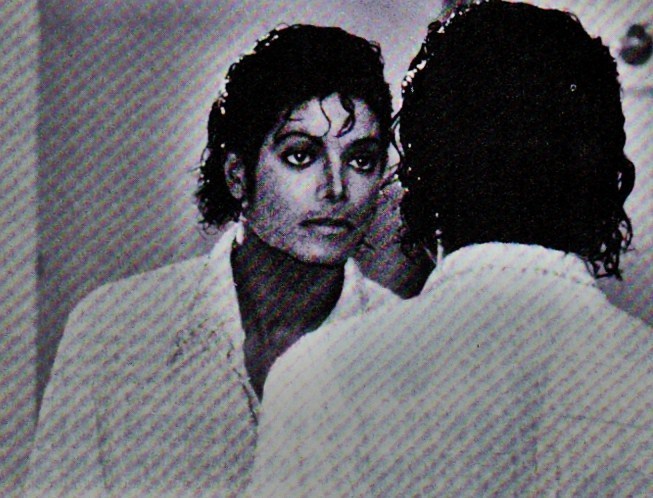
The stars floated to the stage. The stars whirled around each other like glowing hummingbirds, faster and around and then, just as it hit you that the music was “Man In the Mirror,” there he was: Michael Jackson. The stars made Michael Jackson. They made a hologram of him. I gasped. Everyone did. This was alchemy.
As I live and breathe, the man appeared as real and as vital as any flesh and blood person there that night. The effect was incomprehensibly executed, an optical illusion without parallel. Michael Jackson was onstage. Humans haven’t evolved to understand this kind of thing. He is dead, but he was there, he was there, young and talented and he was singing, dancing to “Man In the Mirror,” a song I have long believed must’ve been among his favorites because it simply won’t end. There’s an extended coda to MITM that would be uncomfortable if the song wasn’t so freaking great. After his first “shah-mo” at the final third of the song, you really think it’s going to wrap up but it just keeps going. One gets the feeling Michael wanted that song to go on a long time, maybe forever.
If it would have been appropriate, we all would’ve been clapping, but no one spoke or whooped or did anything. We were all just either crying or holding our breath. The dancers danced with him. They moved as an ensemble with him and it was beautiful. It was the most beautiful thing I have ever seen.
It was the most beautiful thing I have ever seen because it was human ingenuity that brought it into existence. The work that it must’ve taken to build that effect, the science that went into it, the tweaking, the bug fixes, the failures on the way to the end result. I cried the whole time, from the star cloud to the ending strains when the stars whooshed away into nothingness, partly for Thomas Edison for heaven’s sake: we have him to thank for this, too.
It was the most beautiful thing I have ever seen because glowing stars are pretty. And it was the most beautiful because a brilliant entertainer who cared about the world way, way too much to be in his line of work, lived again. And he was doing what he loved the most in a place where he was totally safe and sound: onstage. I don’t believe in ghosts and I don’t believe in heaven. I don’t have to. We have holograms and Thomas Edison, Michael Jackson and airplanes to take us to Las Vegas (and back, thank goodness.)
If you can see that show, you should. Let me know if you do.
Woman with hat in Denmark, 1909. Photo: Wikipedia.
About a month ago, my sink was plugged up.
I emailed my building manager before going a business trip and she replied she had scheduled the fix. I came back several days later, late in the evening, and dropped into bed.
In the morning, getting my tea tray together, I found my sink still clogged. This was extremely gross and I was appropriately annoyed.
“Patricia!” I grumbled to no one and only half-awake. “Grr! This needs to be done immediately. I need my sink! Maybe she’ll send one of the guys up faster if I’ll tell her I’ll be entertaining this weekend.”
And there in my jammies, standing in the kitchen at 5 a.m., I began to laugh. Because the potential of “I’ll be entertaining this weekend” is comedy gold, if you ask me. Consider that “entertaining” is an adverb and a verb and play around with it. You will soon see the logic behind the following little play — and hopefully find it as funny as I did, writing it in my head while I made my tea. I threw my head back and laughed that morning, which is a great way to begin any day, especially when your sink is four days clogged.
That’s Entertaining
by Mary Fons (c) 2013
Woman: I’ll be entertaining this weekend.
Man: Oh will you be.
Woman: Yes.
Man: What are you gonna do, wear a lampshade on your head?
Woman:What?
Man: What do you plan on doing?
Woman: Well … I thought I’d make dinner.
Man: That’s it??
Woman: (Confused.) What’s wrong with that?
Man: Little on the dull side of “entertaining”, don’t you think?
Woman: What exactly should I plan? A parade? Man: That would be something: a one-woman parade.
Woman: I can’t afford — Look, I don’t… A parade??
Man: Maybe you shouldn’t be entertaining, then. Why try?
Woman: You’re awful!
Man: I’m only saying that you gotta go big or go home, that’s all.
Woman: Pru and Barry are coming over. It’s not going to be the party of the century or anything. Just a group of friends.
Man: Don’t they deserve your best?
Woman: (pause.) Well…yes.
Man: Don’t they deserve to be entertained ?
Woman: I suppose they do.
Man: So get a band. A jug band or a fiddle band. Dance. Work up a routine. Really push yourself. Confetti. Do some bear work. To prove you’re entertaining, you gotta entertain.
Woman: Confetti and bears.
Man: Absolutely. Costumes, confetti. You’ve thought of food already, and that’s good, that’s very good, but think: how can you use the food in your act? That reminds me: I’ve got a friend who trains poodles to walk upright. Want me to reach out? No, no. I will. Obviously, you have to sing. Loudly. Loud singing.
Woman: (Fumbling for a pen.) Okay…
Man: Are you gonna tell jokes?
Woman: I hadn’t … I didn’t … I don’t know.
Man: You gotta. You gotta tell at least a few jokes. I know a ton, so I can help you.
Woman: I like jokes.
Man: Make sure you’re waxed and polished. Buffed to a shine.
Woman: I don’t think Pru and Barry care about th—
Man: Oh-ho! Yes they do! People care about grooming.
Woman: I had no idea entertaining was … I didn’t realize how much it’s changed. Thank you, I’ll take your advice, I mean … God, I’ve got a lot to do.
Man: You’re welcome. I’m glad you said something.
Plate 31, Collared Peccary, by John J. Audubon. Image: Internet.
I pass by the Joel Oppenheimer Gallery on Michigan Avenue at least a few times a week when I’m home. It’s on the ground floor of the Wrigley Building, and for several years I didn’t go in because it appeared painfully fancy from the outside. The Wrigley Building, referred to as “the jewel of the Mile,” is a two-winged castle, Chicago’s Big Ben, a tribute to human potential and intelligence, it is among our finest hours as a city. A gallery worthy of space on the first floor of a building like this can’t help but be intimidating, but then I reminded myself one afternoon that the whole Wrigley empire was built on chewing gum. That day, I went in.
The Joel Oppenheimer Gallery, which is staffed by a small number of terrifically friendly people (including the handsome Sarah and Mr. Oppenheimer himself, who on the day I met him was wearing a snappy bow-tie I’ll wager is part of his daily ensemble), specializes in John James Audubon prints. Did you have Audubon’s Birds of America in your house as a kid? We did. Kids are nuts about animals and drawings and drawings of animals and I remember poring over the illustrations in that huge book for hours, freaked out by what I considered ugly birds (vultures, and I was right) and delighting in the sweet ones (lo, the tufted titmouse!) All creatures great and small may be wise and wonderful but some are more wonderful than others:
I had my eye on a print in the window for so long and when greeted by the kindly Sarah on the day of a big sale at the gallery, I pulled the trigger. I love my art and I now love the gallery. On their website they say, “Inquiries are received with pleasure.” With pleasure! Note: Sarah’s desk is a bit foreboding when you walk in, all lacquered and finely turned, but her ever-present, generous wine glass of orange juice atop it quells nerves.
There’s one other piece I’m after. Something about life in the last few years has made me more open to a certain strain of ugliness. The jolie-laide is cool with me, surely because I’m more of a realist than I ever was and there is comfort in looking at things the way they are and the way they are is not always soft n’ glossy. While I don’t plan to inquire to Joel or Sarah’s pleasure about any vulture renderings, I have been obsessing slightly about that guy up top. The warthog.
He’s huge. Several feet across and so tall. Where would I put him? The bathroom? Would I get ready faster in the morning? He couldn’t go into my bedroom; I’d scare my guests. Perhaps the hall, but he needs room to breathe. If the price is even within the galaxy of possibility for my budget (doubtful) I’d get him and figure it out later. Maybe he could go in the kitchen. He looks pretty hungry.
I like him because he’s ugly. I like him because he’s so ugly, he magnificent. He didn’t choose not to be a titmouse. He’s just a lil’ peccary, squalling and stomping, feral and powerful enough to go into any building, faster than me.
When I moved into my condo, I chose not to get a washer and dryer.
There’s a hookup in my pantry (nearly typed “panty”) for this, but I have my priorities. These piorities include high heels, quality prosecco, and a refusal to allow enormous metal boxes to hold my pantry hostage. Besides, there’s a cheery, spacious laundry room in my building. Let the 21st floor have the metal boxes; my calves get exercise anyhow when I take the stairs with a hamper on my hip.
The best part of the laundry room is that there’s this magazine shelf. Done with your magazine, kindly resident? Put it on the shelf for someone else to enjoy! Give a magazine, take a magazine. This is almost worth my entire monthly assessment. On the shelf with astonishing regularity are Town & Country, Vogue, W for heaven’s sake! I leave New York and Harper’s and Elle and though the magazines are not always current, it doesn’t matter. Is Town & Country any more relevant to me now than it was in April of 2011? You see my point.
There are often, gloriously, issues of Food & Wine and Bon Appetite, though these go fast. It was in a hastily grabbed March 2012 issue of Bon Appetite that I learned a simple, fascinating way to discern a good cook from a mediocre one. Ready for this?
Ask the chef to roast a chicken, make a salad, and bake a chocolate cake. That’s all you tell them. Here now, excerpts from the article by Melissa Hamilton and Christopher Hirsheimer:
“You can tell a lot about a person’s cooking skills from these tasks. Take a roast chicken. First, there’s choosing the bird itself: Is it organic and locally raised, or one of those hormone-injected, bodybuilder-like things? Do the cooks rub the skin with butter, olive oil, or nothing at all? How are those trussing skills? Do they roast long and slow or high and fast?”
On salad:
“When they make the salad, what is the choice of greens–tender, crunchy, or both? How do they wash, dry, and store the leaves? Is the vinaigrette made with lemon juice or vinegar?”
And the cake?
“Even a simple chocolate cake requires some baking acumen, not to mention imagination. A sponge cake is really just two foaming batters folded together as the flour and cocoa are gradually sprinkled in. Visualizing those delicate batters, you can see and know how to carefully mix them together without deflating one tiny bubble.”
And so it is that I have a system for gauging my own cooking: In what manner do I roast a chicken? Just what is my chicken-style? If I have a signature salad, I can say with conviction that whatever it is, nuts are involved. As for the cake, I made a killer Sacher torte over the holidays last year and if I needed to impress, I’d do that again.
There’s a special feeling one gets reading words like, “rub the skin with butter,” “tender, crunchy,” and “two foaming batters” while doing a load of whites. To be learning and drying, well, it’s worth a nice roasted chicken for dinner, at least.