
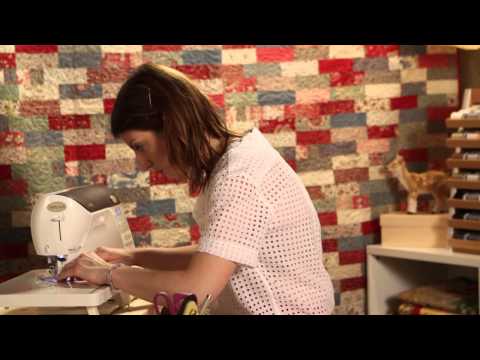
Sometimes, I think I must be out of my mind to do what I do for work these days. I’m on camera a lot and I find it painful to be on camera. Why? Because:
– Whatever you’re wearing, however you style your hair, that version of you is out of date by the time the show airs and forever afterward. You’re like the new car that’s just been driven off the lot — and no one likes a depreciating car.
– I’m not sure the camera adds the proverbial 10lbs or not, but there is most certainly a widening that takes place; an unfortunate spread of oneself onscreen. Is it the worst thing to look a bit more zaftig than you are in person? No. Does it feel unfair when you’ve been working hard to keep fit precisely because you know you’ll be on camera in the near future? Yeah, it does. [Note to self: First time using ‘zaftig’ in blog, possibly first time using it anywhere. Mark in planner.]
– You think you sound one way, but you don’t. You sound that way.
– Editing can delete a multitude of sins, but you can’t edit down to nothing. Thus, the horsey laugh, the bad habit of interrupting, the weird thing you said weirdly — it’s all on tape. Forever.
If you find yourself having to be on camera anytime soon, don’t despair. I have come up with five ways to help you cope with the trauma. Here now:
Mary’s Top 5 Survival Tips For Watching Yourself On Camera
1. Enjoy several alcoholic beverages before you begin. Everyone looks better after a couple drinks, right? This applies to you watching you. If you can get to the point where you start hitting on yourself through the screen, you’re in a great place.
2. Have a friend watch with you. This needs to be a friend who loves you so much she/he can withstand two of you for the duration of the video. Put them in your will if they agree to this.
3. Worried about your hair or clothing choice? Those potential blunders fade quickly when you realize you were younger then than you are now. Instantly wistful and desirous of that outfit, now, aren’t you? Mm-hmmm.
4. Oh, come on. You must’ve said something humorous or intelligent. Find that instance and play it multiple times. Then let the video continue while you go to the bathroom or get more snacks/vodka.
5. Go watch a bunch of Beyonce videos. Isn’t Beyonce amazing? There you go, much better.
Yuri plays the piano brilliantly.
I sing…passably.
We’re probably going to start a band.
Living in New York City, it’s required by law that you have a gig one night a week. It can be anything. Smack fish on your head to Metal Machine Music outside La Mama; present a tinikling showcase in Tompkins Square Park; host a series of one-woman one-act plays on the subway — sky’s the limit. And fear not: if what you do is poorly attended, all the better, as this means you must really want it.
I’m kidding about starting a band or a duo act with Yuri — kinda. I’ve made up songs all my life but, never being formally trained to play an instrument, all songs I’ve “composed” either stayed in my head or died immediately on the mental/vocal vine. My love of writing poems is a result of my love of writing little songs — or the other way around. I like words, so I like to play with them in all kinds of ways. When words have different tones (a.k.a. become songs) well, that’s terrific.
The other night, Yuri and I went to go see a singer at Joe’s Pub. She was wonderful. Floanne was her name; she is French. We went because Yuri was having trouble getting a bike out of the Citibike docking station the day before the show, when a pretty lady approached him and helped him out because that is what happens in New York City constantly, as I have discovered.** The pretty lady was Floanne. She gave him a flyer after helping him with the bike. “Eets a good show for a date,” Floanne said with a wink. Yuri brought the flyer home and said, “Baby, I’ma take you out tomorrow night!” And sure enough, he did. Boy, did we have fun. And there was a big screen onstage for live tweeting during Floanne’s show and I tweeted that we were there because of the bike assistance incident. Floanne is now following me on Twitter.
Where was I?
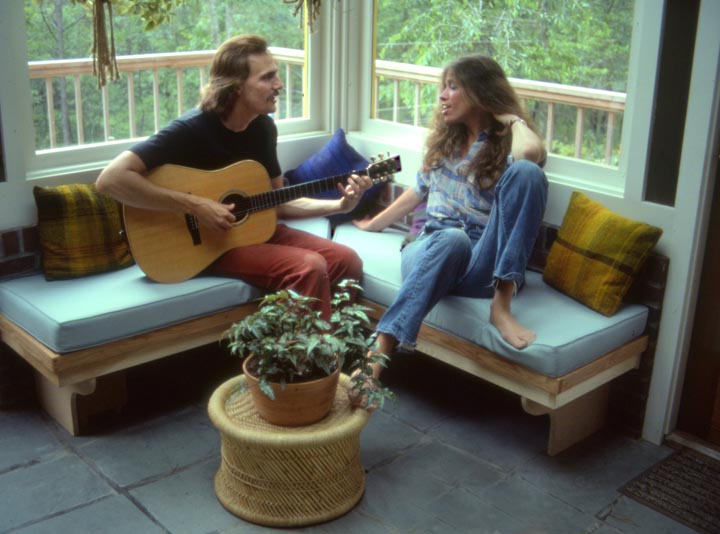
Oh, right: Yuri and my plot to become the next Carly Simon/James Taylor musical power couple.
The first song on the album is going to be my song about Shipshewana. When I was there last month for the big quilt festival, I drove in from Chicago. As I got deeper and deeper into Amish country, I got more and more inspired. The fields were verdant! The sky was blue. And I had been told by someone that the county is a dry one, which means you can’t buy or sell alcohol. Like, maybe at all? I’ll have to check on that one. It didn’t bother me much: I didn’t have plans to do any drinkin’, but I started singing this song about Shipshewana, a kind of ode, but real Judy Garland-y, and it went like this:
“The cows are lowing/the traffic is slowing,
[CHORUS] So.. Whatcha’wanna do/Shipshewana, you
The buggies are all on the shoulder!
There’s lemonade to be had/and that ain’t so bad
But it’s Saturday night/alright, alright,
And whatchoo gonna do?
Whatcha’wanna do, tonight?
Can’t drink
Can’t smoke
Caaaaaaaan’t even dance
So whatcha’wanna do…tonight.”
It’s a real sweet-sounding song, so please don’t read those lyrics and think I’m dogging on Shipshewana. I love it there. It’s just a song about not doing all the things that most of the rest of the state of Indiana is probably doing on a Saturday night. It’s really fun to say the word “Shipshewana” and it’s even more fun to sing it and rhyme it with “whatcha’wanna.”
Now if only we had enough money to buy Yuri a baby grand and a whole other apartment to put it in.
**It’s not that pretty French singers constantly come to your aid in New York — it’s people in general who do. You’ll have to go to Paris for more pretty singers per block…maybe.

The webinar series I have begun is proving to be as educational and groovy as I thought it might be. The next installment is next week, Wednesday, July 24th. The time of the show changed from the afternoon slot we had last time to accommodate those who wanted an evening time slot this time. At 8pm EST tomorrow night, it’s showtime. (Is that prime time?? I think it is! Very exciting.) As always, you don’t have to watch the thing live; you can download it whenever you please and watch it whenever you please.
Next week in the Color Me Quilter webinar series, I will examine pink in American quilts and help you use pink in your own quilts. We’ll talk about cool toned pinks (“bubblegum” pinks popular in the early 20th century) vs. warmer toned ones (“double pink,” a.k.a. “cinnamon pink” all the rage during the Civil War) and we’ll look at the pink stars of the quilt shows — think Rose of Sharon quilts, charm quilts, and countless baby quilts, of course. Goo-goo, ga-ga.
As for me, well, I adore pink. Slavishly devoted. If stopped on the street and asked what my favorite color is, I would have to say red, “in small doses.” But doesn’t that mean pink is, by default, second in command? And if I prefer red, meted out, might I accept pink in waves? Why, yes. Yes, I would. Do. Give it to me.
The calmness of pink. Its wink. The quiet power of pink and its allies — for you don’t put garish bright yellow with pink, or a crazy Kelly green, not if you’re wise. Pink needs gentleness around it; all goofiness must go. So pink attracts like minds. And I like pink’s mind.
Join me for Color Me Quilter. Wednesday next week. Let’s spend time together and geek out about our quilts. Let’s get inspired by the color cool enough to not even want to be red.

Though I’ve had to take a wee break, I am still working toward my Master’s degree. My advisors have informed me that Columbia is the place to continue the MLA I began at the University of Chicago; if I can get in, stay put for long enough to do the work and not get sick for any length of time, why, I might just be able to get that ol’ girl done. I have a ways to go but I also will probably not die anytime soon. I’m saying there’s time.
I’m not wasting precious reading hours while I get my ducks lined up, though; there’s thesis research to be done and I’m doing it. I know what I want my thesis to be about after taking several workshops about putting together a thesis: I want write about diarists. Being one, and being a fan of them and (by and large) the diaries they write, I suspect I’ll be endlessly fascinated. As I think more and more about tackling a thesis in my life and as I read more and more, the actual intent and focus of the thesis will be revealed and who knows? Maybe I’ll actually discover or contribute something to a body of study that is pretty robust already. For now, I’m just reading diaries and biographies of diarists and books about the diary’s role in Western literature and that’s my school right now.
And in my para-research (doesn’t that sound fancy) I have discovered a wonderful poet that I hadn’t known about before: William Soutar. English majors may groan and shake their heads that this person was unknown to me, but cut me some slack: I studied theater in undergrad. Can you quote a line from Major Barbara? Ah-ha! Didn’t think so. (Note to self: Look up pithy line from Major Barbara.)
William Soutar was a Scottish poet and writer who had a rather tragic life. Born in 1898, he contracted a virus when he was in his twenties and this went untreated. By the time he was thirty-two, he was bedridden, quite ill, and essentially paralyzed. He spent fourteen years in bed and died when he was just forty-five.
But he was an incredible poet and writer and refused to let his ill-health take his brain or his passion as his body lay so feeble. He read and read and wrote and wrote and had all kinds of things published. It was said that his bedroom was one of the centers of the 20th Century Scottish Literary Renaissance, due to all his work and all the heavyweight writers that came to hang out with him.
He wrote wonderful poems for children (“the bairnrhymes”) but is maybe best known over here in America for his Diaries of a Dying Man. The diaries he kept for so many years are all in a book that you can buy (because the world is amazing) and just this very morning I wept reading a certain entry. It is such beautiful writing. Soutar was human and he has his moments of despair and frustration and angst, but by and large, he’s just crazy lion-hearted and awesome and so freaking smart that you ache for his situation while you marvel at his talent. Yes, I am slightly in love with William Soutar (no, Yuri does not feel terribly threatened.)
Here, to whet your appetite, two passages from Diaries of a Dying Man, by William Soutar. The first one is the one that made me cry a little this morning over my tea. The second is a favorite so far.
“I wonder if fit mortals realise that infirmity makes the most ordinary actions wonderful. A person, like myself, set aside from the thoroughfare of life can often look on life’s manifestation with a detachment denied the protagonist in the market-place. Common acts become isolated from particular times and places and grow, by recollection, into moments of beauty loved in themselves without desire or regret. Thus everyday phrases can bring to such a watcher a rounded image of loveliness mysteriously coloured by the consciousness that he himself can no longer enact them; phrases such as ‘he lifted a stone’, ‘he stood by the sea’, ‘he walked into the wood’.”
“For some weeks past I have found myself, from time to time, putting out an imaginary hand as if to touch the earth in a comprehensive gesture of love — but I do not deceive myself by these vague stirrings of affection : it is so easy to love a ‘thing’ : one must learn to love people first.”
The toughest thing about being in a new place is the lack of perspective.
I live in New York City and I have no perspective on this experience yet and won’t have it for some time, because that’s how perspective works.
I look back on my twelve-plus years in Chicago, I see eras. There were the First Years, the rough ones, with their questionable choices and misbehaviors (all with the best of intentions, of course.) Those years contained the Poetry Years, thank goodness, or I might not’ve survived at all. That era, with all its earnest youthful disregard gave way to a better time: the Affianced Years. That was pleasant. I had found someone I cared for deeply and was enough of an adult to pair up in a real way. My foolish choices were slashed down to (almost) nil. And I wasn’t a waitress anymore. Right before the Affianced Years began, I began to be able to make my living as a full-time writer-performer and I clung desperately to that fact. The proclamation was (and has remained) a cornerstone of my entire identity. It probably matters too much, but for me, I can’t do it any other way.
The Marriage Years immediately followed the Affianced ones (they’ll do that) and they overlapped entirely with the era known as When I Was Sick. (I was diagnosed less than a month after I walked down the aisle; surgery was a month later — to the day? — of my wedding.) But inside those years were the Best Theater Years I ever had, making art with the Neo-Futurists.
And then The Divorce. And then Downtown Me. And then I left.
Anyway, all this is to paint — mostly for myself, I have to admit — the picture of what happened back in Illinois. Broad strokes, yes, but it’s chronologically correct.
I’m in the First Years again.
And it’s great here, and I’m not the twenty-one-year-old girl (good grief!) that I was when I had my first round of First Years, but I know full well that I have a whole lot of perspective to make. I will get lost a dozen times. I will be mistaken about the character of this or that person. I will embarrass myself. I will not find my favorite shops for at least 6-12 months. There’s no way I can learn the shortcuts: I don’t even know the longcuts.
I’m not exactly bummed, but tonight, I know too much about not knowing anything at all.