

I’ve written and rewritten this post three times. It’s too special, I’m too excited, and as a result, nothing is coming out right. That’s ironic, because the School of the Art Institute of Chicago (SAIC) thinks I’m good enough at writing to let me into their Writing MFA program this fall. By then, I’d better have my act together because I’m officially enrolled.
It’s been terrible keeping this secret; I got my acceptance letter in March. Claus was here, and when I opened the envelope and saw the good news, it was like I had a rocket pack on. Claus caught me and spun me around and around.
I waited to tell you because I wanted to share this properly. It’s a big deal, and not just because the SAIC is one of the finest educational institutions in the world, which it is. It’s a big deal because my life is changing with this. I engineered it that way, really; one day last fall when I was in Iowa to film TV, I burst into tears in the middle of my mother’s kitchen and admitted to myself that I wanted to study writing. I couldn’t deny it any longer and I began to research grad programs that very day. It became clear right away that the SAIC was the only school for me. I didn’t apply anywhere else.
So, the Art Institute of Chicago is the big, famous art museum downtown with the cool lions out front. The School of the Art Institute of Chicago actually started first, way back in 1866. The art the founders collected for students to study became the museum.
At the SAIC, a grad student can study textile art, performance, art therapy, art restoration, sculpture, painting, arts journalism, art history, interior architecture, writing — there are other departments I’m not thinking of. What’s extraordinary about the SAIC (one of the many, many extraordinary things) is that they encourage interdisciplinary study. They want performers to take sculpture classes. They want writers to take textile arts classes. They are legendarily good at educating creative people because they understand how creative people learn (i.e., by doing, usually by doing many things that appear unrelated.)
I submitted portfolios to Writing, Textile Art, and Performance. I had all the materials for each program because my entire life is interdisciplinary. But I wanted writing. I decided that if I got into textiles or performance, I wouldn’t go. Even if I could take writing classes while technically studying fiber arts or stage stuff, it wasn’t enough. I wanted to be a Writing MFA candidate. From there, I could study my other loves. And I got my first choice. So now, I can.
The School has a longarm in the Textiles department. What will my quilts become, now that I’m going to be in art school? What might it mean to use quilts in, say, a one-woman play? Will I write a quilter’s memoir? Will I create my own poetry magazine and if I do, will there be patchwork quilts on the cover? I’ll tell you that if I make a poetry magazine, there most certainly will be quilts on the cover. These are the sorts of synergies that are sure to occur when I begin school. I cannot wait. I am counting days.
My job is not one you quit — and I have no intention of doing so. I’ve got teaching and speaking gigs scheduled into 2018. New fabric is coming out in a few months. The Quilt Scout is going strong, I’m making quilts like crazy, I’m working on a pattern project, I’m curating a quilt exhibit at Spring Quilt Festival, I’m on the board of the Study Center. My career in the quilt world isn’t going anywhere — but it is changing (you’ll see me less on TV, for example.) But you watch: these changes will be nothing short of wonderful. You’ll see it all happen, right here. (Psst: it’s all for you, anyway.)
I’m scared. It’s so expensive. I’m taking out loans. It’s two years. It’s gonna be hard. But if I don’t do it now, when?

Right now, this second, I just got off work.
About an hour ago, I took a bow after giving the evening program at the banquet dinner for the gorgeous, enormous Minnesota Quilt Show here in St. Cloud. The amount of work that goes into a show like this is remarkable. To all the attendees, to the women and men who help make the show every year — and who specifically helped me get here, do my thing, and scoot on out tomorrow morning — thank you. I said it all day long; now it’s in writing.
I got in late last night on a delayed flight. I taught a class from 8:30-11:30am. I learned my books didn’t arrive for the book signing. We did damage control. I did a lecture from 11:40-12:20. I did a book signing from 12:30-1:15. I did a class from 1:30-4:30. I arrived at the banquet dinner at 6:00pm. You may have noted that there wasn’t much time for lunch in my schedule, so I brought snacks. I’ve been trying to avoid excess sugar but there are no words for the joy and gratitude I had around 3:00pm for the four pieces of toffee I found in a Ziploc baggie in my purse. That toffee was the secret to my success.
Here’s what I love to do:
– teach people how to make quilts
– lecture in an entertaining manner on the history of quiltmaking in America
– meet fellow quilters
– travel
– make a living doing what I just described
But I’m going to be honest: I’m in my nightgown with a face mask on, sitting in a Lay-Z-Boy recliner in a hotel room in St. Cloud, MN with my laptop and as of now, as of this very second, I have the entire summer off. This was it. Tonight was the last one. School’s out for the summer, you guys. The last time I had more than two weeks off was January for heaven’s sake. Before that, I couldn’t tell you. But from where I’m sitting, from what I’m looking at on my Google calendar, my next gig is in September and that means I have a summer.
I’m so excited. I’m so happy. I mentioned last week how I’m going to take a Spanish class. But there’s more. I’m going to park my tushie and hand quilt my first quilt. I’m going to work on a cool art project I’ve only just started. You bet your bippy I’ll be blogging. But I’m not going to be writing PaperGirl on a plane, which happens a lot — more than I tell you. I’m going to blog in my very own Lay-Z-Boy (note to self: purchase Lay-Z-Boy) with my very own bed not far away. I might even bake more bread.
Now:
I told a ballroom full of people tonight a special piece of news that I have only shared with a few people. Well, I’ve shared it with a few close people in my life and now a ballroom full of strangers. It’s big news, friends. Seismic. Tectonic plate-shifting big. I’m not pregnant. I’m not moving to Germany. I’m not sick again. The news is a very, very good thing. It is a big thing. And I didn’t know when I’d break the news but now, sitting here in a hotel on the banks of the Mississippi River, imagining this special summer stretching out before me, I see that it’s time.
We’ll talk tomorrow.

One Sunday afternoon, many years ago in Iowa City, I was trying desperately to charm my then-boyfriend’s parents.
We were all riding in his parents’ car. His dad was driving. His mother sat in front seat. Guy and I were in the back. And I did fine the majority of the trip.
The fellow I was dating at the time was a chef — a good one. When I got the job at the cafe where he cheffed, I knew nothing about food beyond Mom’s spaghetti and my young-adult version of it.* But this person, this chef, taught me how to eat. He showed me the world of fresh food beautifully prepared and it changed my life because I love my family, would die for my family, respect and value my family — but my family is not a food family. That’s okay! But when I learned how to eat (and how to cook) because of the chef, life tasted different. And I like different.
So we’re in the folks’ Beemer and Chef’s lovely, intelligent, handsome mother asks me this or that question about this or that thing. I have the occasion to use a word that I liked — liked, past tense: chutzpah. Great word. Yiddish. Means “shameless audacity, impudence.” Like, “He had the chutzpah to run for class president after pulling that stunt in gym class.” I knew how to use the word. But I didn’t know that chutzpah was pronounced “HOOTZ-pah” and ideally, one should do that Yiddish glottal cough thing with the “H” sound. I didn’t know any of that. Your hapless heroine pronounced it, “CHUTT-spa.” Hard “CHUTT.” Spa.
These people were Jewish. By the way.
Chef’s mother made this sound that was half-gasp, half-snort and turned back to look at me with kindness but great, great mirth. “Honey, you pronounce it ‘HOOTZ-pah.” I cocked my head to the side.
“Ha. Ah. I see. Well, you know, then, ha. Ha, then. It’s… She had HOOTZ-pah. For the thing. Are we close? I think we’re close.”
Over a decade! Over a decade since I said “CHUTT-spa” in a car with three Jewish people all with generous Yiddish vocabularies and I still can’t forget it. I thought about it today because I saw the word in an article and that’s a pain because the chutzpah memory starts a machine in my head that spits out all the other times I’ve mispronounced words in mixed company. I was at a fancy lunch meeting once — one example — and ordered the endive salad. I said, “I’ll have the EN-dive salad, please.” The waitress repeated back, “The ahhn-DEEVE salad?” and I wanted to stick my head under the tablecloth.
Turns out you can say “ahn-DEEVE” or “EN-dive.” Both are okay. But there’s just one chutzpah.
*Note: Both versions = amazing

It’s summertime. And with summertime comes clothes that show more skin. Pasty as ever — even more pasty than usual, what with this pesky anemia thing — I am facing my short sleeves and dresses with a furrowed brow. And freckles.
For your reading pleasure, a post written two summers ago when I was living in New York City, which seems like it was a galaxy ago. A very close, very familiar galaxy ago.
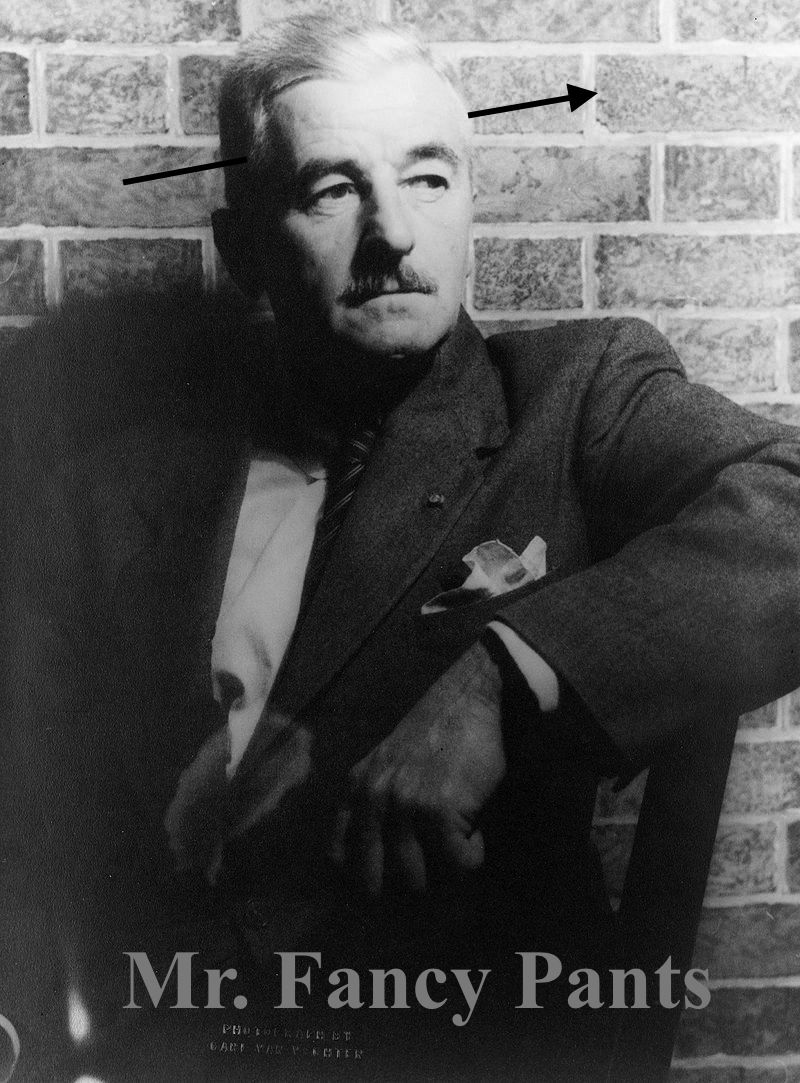
The Sound and the Fury. As I Lay Dying. Intricate, internal monologues woven through boundary-pushing modernist novel structures; characters so complex and layered they are thisclose to materializing on the couch while you’re reading; trailblazing treatments of racism in American literature; one of the longest sentences in all of literary history (just shy of 1,300 words) found in Absalom! Absalom! and he won the Pulitzer for Literature in 1949 so okay, fine. William Faulkner knows about writing.
But I picked up Volume II of the Paris Review Interviews the other day and I have decided that though Faulkner deserves his spot at the table of Best Ever Writers, he was not nice and I don’t like him. Does Faulkner need to be nice? No. Does he need me to like him? Certainly not, for a number of reasons, the most obvious being that he is dead. But while I agree with some of his rallying cry stuff about how an artist has to be painfully dedicated and driven and in competition with herself, I read some of his answers and became deeply depressed. Because the kinds of things he said directly contribute to countless writers — young and otherwise — who think it’s okay to develop into myopic jerks, okay to maybe nurture an alcohol problem, and definitely okay to not make rent, all because Faulkner was feeling passionate and grumpy the day he said this kind of thing on record:
“The writer doesn’t need economic freedom. All he needs is a pencil and some paper. I’ve never known anything good in writing to come from having accepted any free gift of money The good writer never applies to a foundation. He’s too busy writing something.”
I see. So a person should never apply for a scholarship? Never apply to a foundation so she can write her book? That’s cool. I’ll just keep working nine jobs and try to squeeze in my Sound and the Fury while I’m on the interstate. Did they even have health insurance in 1929? Then there was this, when asked if writing movie scripts could hurt a person’s writing:
“Nothing can injure a man’s writing if he’s a first-rate writer. If a man is not a first-rate writer, there’s not anything can help it much.”
Mr. Faulkner, how do you feel about success?
“Good [writers] don’t have time to bother with success or getting rich. Success is feminine and like a woman; if you cringe before her, she will override you. So the way to treat her is to show her the back of your hand. Then maybe she will do the crawling.”
Wow! Yuck!
These words strike me as not just harsh but barbarous and he must’ve meant it, because who cares about words more than William Faulkner? He cares about words so much that he says barbarous things to keep them safe, I guess, from people who abuse them, don’t understand them correctly, rub them together in ugly ways while he’s around to have to smell it. Look, I understand there are a whole lot of people in the world who would be better off being an actuaries, for example, than writers, but you know what? They/we will probably figure that out. And if they don’t but are blissfully happy writing their romance novels or whatnot, who cares, Bill? You’re a real piece of work!
I’m probably missing the entire point. Some Faulkner society will get a google alert that this blog post exists and they will laugh and highbrow-high-five each other at reading group. They can go ahead because I’m on Team Orwell and Orwell wasn’t nice but he wasn’t fancy, either.
*I wrote about the Paris Review books another time.