
The thing about being sick for a long time is that when you first get sick, everyone’s like, “Oh no! You’re sick! Can I help?!” but then life continues apace and no one can be faulted for kinda forgetting about sick folks. Not completely, not everyone, but the blush is off the IV tree after awhile. It’s okay. We are all doing our best, usually.
Libby Lehman is a quilt industry visionary who had a massive aneurism last year. She nearly died but did not die, which is to say she barely survived. When she came through her ground zero, her life was altered forever. She’ll probably never make a quilt again, though extraordinary things do happen and when they do, they do because people like Libby do them. Libby is in therapy, she is working on using her hands again and she learning to speak again. She’s gettin’ her sass back, too, from all reports. She needs 24-hour care, though, and there is nothing about that that does not suck.
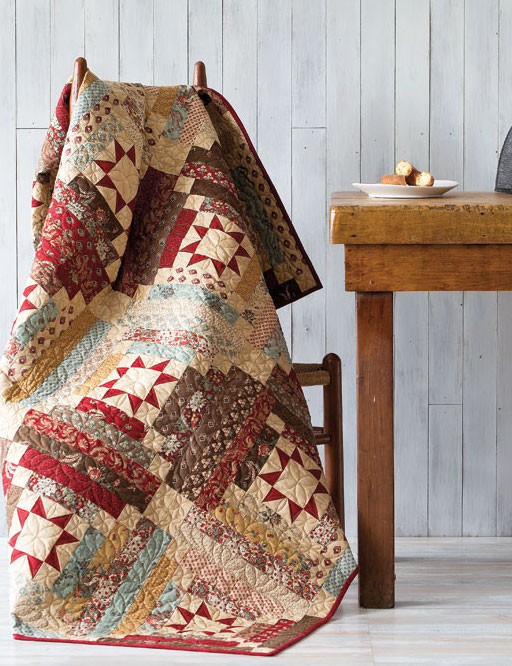
My mom made a quilt to raise money for the medical bills not covered by Libby’s insurance. Mom used fabric by Moda that was expressly produced to raise money for Libby, too. The quilt is called “LIbby’s Log Cabin” and it’s gorgeous and it’s pictured above; the quilt is 60” x 75”. You can win this quilt by sending a donation of any amount to the address below; Libby’s sister is taking the donations. Mom will draw a name on Friday, February 13th and I promise to announce the winner on Facebook. Moda is also covering this contest, so watch their blog and Twitter and all that, too.
Libby was one of the first quilt industry people who was like, “Can we please stop using slide projectors and get on the whole digital projector thing?” She also pioneered new techniques in thread painting in contemporary quilts. Without innovation, art goes nowhere. Without early adopters, people go nowhere. Libby is as cool now as she has always been, she just can’t walk or talk very well. By helping pay the Man for in-home therapy, medicine, and maybe even a dinner out at some point for her 24-hour caregivers, you’re helping your fellow man, your fellow women, and yourself. Because we are all temporarily-abled, you know.
For your chance to win, send a donation of any amount to:
Libby’s Log Cabin
c/o Cathy Arnold
2220 Stanmore Drive
Houston, TX 77019
Good luck, Lehman.

It remains to be seen if I shall be a mother in this life.
In college, I was a vocal member of the “Kids? Me? Never!” Club. There were all kinds of reasons I swore I’d never have kids, none original or hardy, but one’s twenties are for making impassioned proclamations that may or may not stick. My eyes were on work and art and catching the eye of the chef at the restaurant where I waited tables. At that time in my life, it would’ve been far more plausible for me to say, “I’m thinking about switching my major to poli-sci,” than to say, “I think I’d like to have kids someday.”
Once I got kicked in the face by post-college, big-city life, my “Kids? Me? Never!” Club (KMNC) card was further accredited. A big, red, rubber stamp traveled all over it with words like “Broke” and “Aimless” and “Too Much Vodka.” Kids were now even further out in Possibilities Ocean. Back then, you would’ve heard me say, “I’m really happy with my stock portfolio right now,” sooner than you’d have heard me say, “I think I wanna be a mom.”
Then I got married and talked with my then husband about starting a family, of course. Then I was smote by God. Then I got divorced. Somewhere in that melee, a couple doctors said, “A pregnancy? For you? With the eh and the meh? Maybe not such a good idea.” There were others who were like, “You’re fine, you can have kids, no problem.” And as all this transpired, my KMNC card started to show some wear. I would forget to take it out of my jeans and send it through the wash. I would clean out my wallet and forget to put the card back in and then I’d find it a few months later and go, “Oh, yeah. This thing.” Sometimes, I even thought about throwing it in the garbage on purpose. Because when someone tells you (me) that you can’t do something, naturally, this thing you cannot do becomes the thing you must do. I don’t believe I must have a child, but my refusal to consider it is gone. The card is gone.
The other day, I heard a woman on the radio talking about adopting a little baby and raising that baby on her own. The story was beautiful and suddenly I had something in my eye. “I should do that,” I thought. “I could adopt a kid someday.” And I wrote down on a post-it note, “I think I want to adopt a kid someday” and I put the date on it: January 28th, 2015. It’s on the fridge right now. Who knows. I figure I could give a kid a pretty good life.
A video of a man being burned alive in a cage has been playing on small screens around the world since yesterday. I haven’t seen the footage but I heard about it on the radio. Though I keep my media intake extremely low, I have been surprised that in the commentary I have heard, no one has talked about how to ensure that young children do not see videos of men being burned alive in cages. It sounds like everyone is “horrified” and that the act was “unconscionable” and “terrifying” and if it is all those things to someone who can drive and read the paper, what do you suppose it is to someone who is six?
If I were a mother, I would read to my kid. Constantly, all the time. Questions such as, “Mommy, can I get this book?” and “Mommy, can I read while I take a bath?” would be met every time with “Yup.” I would make sure the kid had clean clothes and sandwiches. And if there was a video going around of a man being burned alive in a cage, I would throw my body over as many screens as I could to protect that child from seeing something like that.
A six-year-old is gonna learn about death. Bugs, birds, and hamsters all die and this is nothing to be afraid of when you’re using truth and kindness to discuss it. But cockroaches who burn men alive in cages, record themselves doing this, and then use their footage as a dental drill on the raw nerves of their enemies, this is not the kind of death a child can or ever should stare down.
You don’t need to be a mother, I guess, to feel lioness-level rage.

I heard a parable once that stuck to me like bubblegum on my high heels. It’s one you may have heard yourself — you’ll recognize it at once if you have — and if you haven’t, do enjoy the stickiness. This is my retelling, which I’m sure is clear.
There once was a farmer who had a single horse with which to work his land. One day, the horse ran away. “That is terrible news!” said his concerned neighbor. The farmer shrugged and said, “Who’s to say what is good and what is bad?” The neighbor probably looked at him like he was weird. He was kind of weird, but that has nothing to do with the story.
The horse came back the very next day and brought another horse with him! Very good news, no? Maybe, maybe not. Because the farmer gave the second horse to his strapping son and the next day, the horse threw the young man off and he broke his leg in like nine places. The (nosy) concerned neighbor said, “Ooh! Now that is bad news!” but the farmer put up his hands and said, “Who’s to say what is good and what is bad?” Now the neighbor was like, “See ya,” and he didn’t take over a hot dish to the son, who was convalescing.
In a week or so, the king’s men — because we are in Arthurian England, suddenly — came to take every able-bodied man to war. They didn’t take the farmer’s son, clearly, because he was useless to them with the broken leg.
Good news, no?
I think about this story so much. Because again and again and again in my life, I see this playing out. When I moved away to college, I was sad and afraid. But then, you know, college was awesome. I got a job in a nightclub when I was twenty-two and thought, “Boo-yah!” but it was terrible after awhile. I was so excited to move to New York City last year and then it turned so sour. And I was incredibly sad and disappointed when I had to relinquish my lovely D.C. townhouse to the rat, rat, rats, but do you know that… Well, I’m so happy here. I love this building now. It’s cozy. It’s safer. The sun comes up over Washington D.C. in peachy pink and golden orange and I just feel so happy.
I’m not sure how anemia can be good, but who knows? The boy in the story who shattered his leg certainly didn’t think it was very good, but then he didn’t have to fight in a war. Maybe I’ll be spared a war.
Maybe you will.
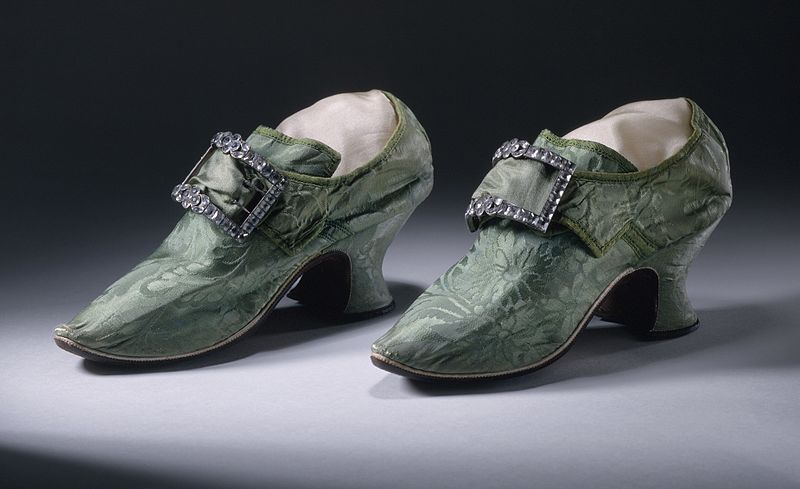
All this talk of magazine closures and hemogoblins calls for lighter fare. It’s time for fashion.
Years ago, I dated a chap who did not own a pair of bluejeans. He was fancy. He wore suits and bowties and because I liked him so much, I decided to clean up my act. I was a scruffy, twenty-two year-old slam poet waitress, so I naturally lived in jeans and hoodies. This guy was charmed by me, but it was clear that I’d need a dress or two if I was gonna go out with him.
Embarking on this upgrade wasn’t easy; I was still on a waitress budget, so I got good at sourcing fake pearl earrings and designer dresses at secondhand shops. But it worked. I began to cut a fine figure, if I do say so. I kept refining it because I discovered was that when I dressed a little nicer, when my shoes were polished, life was kinda better. People smiled at me more. I walked a bit taller. This was not social climbing — no one was mistaking me for Brooke Astor — but it was confidence-building. I was hooked.
The dapper fellow dumpity-dump-dump dumped me and broke my heart, but I continued to work on fanciness. (Who needed that guy, anyway. Bow-ties? Seriously?) Not long after the breakup, I quit working as a coat check girl and a waitress and got several great writing jobs. Eventually, I could afford nicer clothes (take that, Mr. Fancy Pants!) and I learned the true secret to looking good in one’s clothes:
Buy nice stuff, never at full-boat retail, and get a good tailor.
Got a nice dress? Take it to a tailor. For a bit o’ cash, you can get that dress taken in a nip there, let out a bit here, and voila: you are now a smokin’ hot mama. Gentlemen’s suits can be shaved down a smidge or opened up a bit; suddenly a fellow who looked rather average before is now A Man of Consequence. Tailors vary in style and price, of course, but start humbly and get used to the process: you’ll come to love it. You know all the dry cleaning places with the signs that say, “Alterations”? That means they do alterations in there. The pantsuit you really love but never wear because the crotch is…well, it’s not good. That can be fixed, usually. Instead of buying a new outfit ($100+) you can be green, fancy, and look great for far less.
Cobblers are important, too. The high heels that look like the dog chewed them can be restored within a day or so. Twenty bucks at a shoe repair shop beats Zappos with a stick.
That is the fashion report. The body report is that I’m feeling better but worried that my body cannot absorb iron. A friend emailed me to share her own anemia trouble; she’s been battling acute anemia for several decades. I may be in for another odyssey; we shall see. Thank you to each and every kindly soul who sent encouragement. I can’t reply to all the comments but I see all of them.
Thank you. Now go into your closet and make a plan!
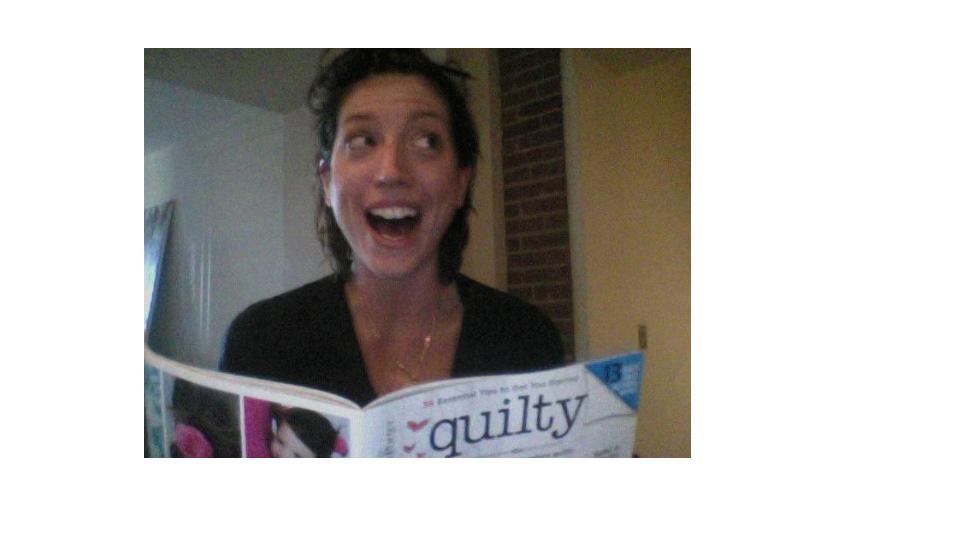
I’ve been dragging my feet, writing the last Letter From the Editor for Quilty’s May/Jun ’15 issue. It’ll be tweaked before it’s in print at the end of April, but I’m happy with it for now.
Dear Friends:
The first issue of Quilty magazine came out the summer of 2011. As the magazine was put together, I remember knowing only two things for sure: Quilty needed to exist, and I needed to learn how to make a magazine really fast.
What you are holding is the last issue of Quilty magazine. With thousands of fans and a river of “I love you, Quilty! You taught me how to make quilts!!!” fan mail, it seems impossible. Quilty has made such an impact; isn’t it only getting started? Yes, but that start looks different than I thougt it would. More on that in a moment.
The reasons for closing a magazine are numerous and, frankly, rather boring; it’s all P&L spreadsheets, dry meetings, and examination of market data. Knowing that magazines close almost as frequently as restaurants is cold comfort to me. It takes a village to make an issue, but Quilty has been like my kid and now my kid is leaving home.
This is where I get Kleenex.
There’s no need to cry, though; Quilty is immortal. We have proof in letters, comments, pictures, and emails that hundreds and hundreds of people have learned to make quilts because of Quilty. Beginners everywhere — and not a few veterans — have been inspired to become that beautiful thing called “a quilter” because of a little magazine. Is Quilty really over? Hardly. For the people who learned by and from it, it will always be part of their story.
“Where did you learn to make quilts?” they’ll ask you.
“Oh, there used to be this wonderful magazine called Quilty. It was so great. It ran great patterns and there were all these how-to’s and tons of quilt history and context. It closed, but I have all my back issues. Wanna borrow them?”
And then another quilter is born and another. We are all stitched together, a big patchwork quilt. Quilty has been and will always be just one patch. Thank you for reading.
Piece,
Mary