

I have had the same Canon Pixma MX420 printer/scanner since October 1, 2011. I know the exact date because I bought it on Amazon and I’ve just learned that when you buy stuff on Amazon, Amazon keeps the date of your order. This means that if you go through a breadmaking phase or an “I’m-going-to-read-George-Bernard-Shaw’s-entire-body-of-work” phase and years later you have a reason to figure out when all that went down, you can look back at your Amazon purchases and find out.
My Canon Pixma MX420 printer will not die. It has moved with me — wait for it — seven times since I bought it. That’s a lot to ask of a plastic box with glass, microchips, and a laser inside of it. All those boxes, those trucks, the accidental bang here, the on-purpose bang there — the girl is as good as new. She prints. She scans. Her LCD display is bright as ever. Her USB ports are unsullied. She has her pride, her morals.
I still don’t like her, though. That’s the problem: I’ve never liked this printer. Oh, I like that she works. I give thanks for every single page she spits out because at this point, every page strikes me as miraculous. What I don’t like is her attitude. My printer has an attitude problem and believe me: we’re close. I know her better than anyone. We’ve lived in the same (seven) house(s) for five years.
If you hit the wall switch and the power goes off on her without you turning her off at her console first, when you go to turn her on again, there pops up a message that says, “The printer did not shut down correctly. Next time, press OFF before disconnecting power to the printer.” I’m sorry, did you say, “Next time”? What am I, your office drone? And you can’t do anything until you hit the “OK” button to “ACCEPT.” So this printer is like, “I’m not doing anything for you until you acknowledge what you did. Until you admit you made a mistake. OK? Until you ACCEPT IT.”
“I accept all kinds of things!” I used to yell. “You don’t even have a spinal cord!” But I stopped that years ago. She’s a printer. She can’t hear me.
And once I knew better, I did better: I dutifully turned her off before I flipped any wall switches. I learned you have to lightly touch the “Off” button to wake her up before she’ll let you actually turn her off. So you have to do a light tap, then a convicted press. If that second contact isn’t deliberate enough, it won’t work, so your instinct is to just tap again, but that does nothing. So you go to press hard again, but by then she’s been tapped and is feigning confusion. It took me several years to figure out how to avoid this mess; done sloppily, she’ll just turn off and on again at least twice. Don’t get me started about the fuss she makes if she runs out of paper.
Today, my icy heart melted a little. I looked over at her, printing out two contracts, a cover letter, and a 24-page chapter of Claus’s latest book (in German!) and thought, “That blinkin’ thing still works.” I thought how weird her life must be. She’s either dealing with the shock of being woken up and turned off out of nowhere or she’s idling, waiting for a command from a computer she can’t refuse if she doesn’t like — or approve of — the content. Being a printer does not sound like a good time.
I have just realized that not so long ago, I wrote about the issues I have with my stove. Wow, okay. I am going to back away slowly. I’m going to put on some makeup. Get dressed. Go outside. Meet some people. Talk with words.
I travel to upstate NY on Thursday for a 3-day work trip. Sometimes it’s hard to head off to a gig; sometimes it’s clearly good for me.
[EDITOR’S NOTE: Canon, I know how corporations work. I know you’re watching your SEO. I know that if I say that I love the Canon Pixma MX420, someone — even if it’s a robot first — will see it. And surely you reward those people who are devoted to you and your product. Perhaps you will reward me with complimentary ink, perhaps, or an upgrade, maybe, should say that I love my Canon Pixma MX420 best printer for all best printer Canon Pixma printer scanner combination best Pixma MX420 ink ink cartridge Pixma Canon best home printer top ten printer scanner combination Canon printer MX420 ink refill top ten printers for home office Canon best printers for home use or business use highest rated Canon printer? Thank you for your consideration.]
I was going through the dumb iPhoto album on this dumb laptop, looking for a dumb picture that apparently is in my old laptop’s dumb iPhoto album, though it’s likely it could be in either my dumb desktop iPhoto album or my old desktop iPhoto album, which is also dumb. I have sworn that when this laptop dies, I am switching to a Windows Surface thing. Seriously, I am doing that. The Mac cloud has failed me too many times and Steve Jobs is dead. These are facts, and I never found that picture I was looking for.
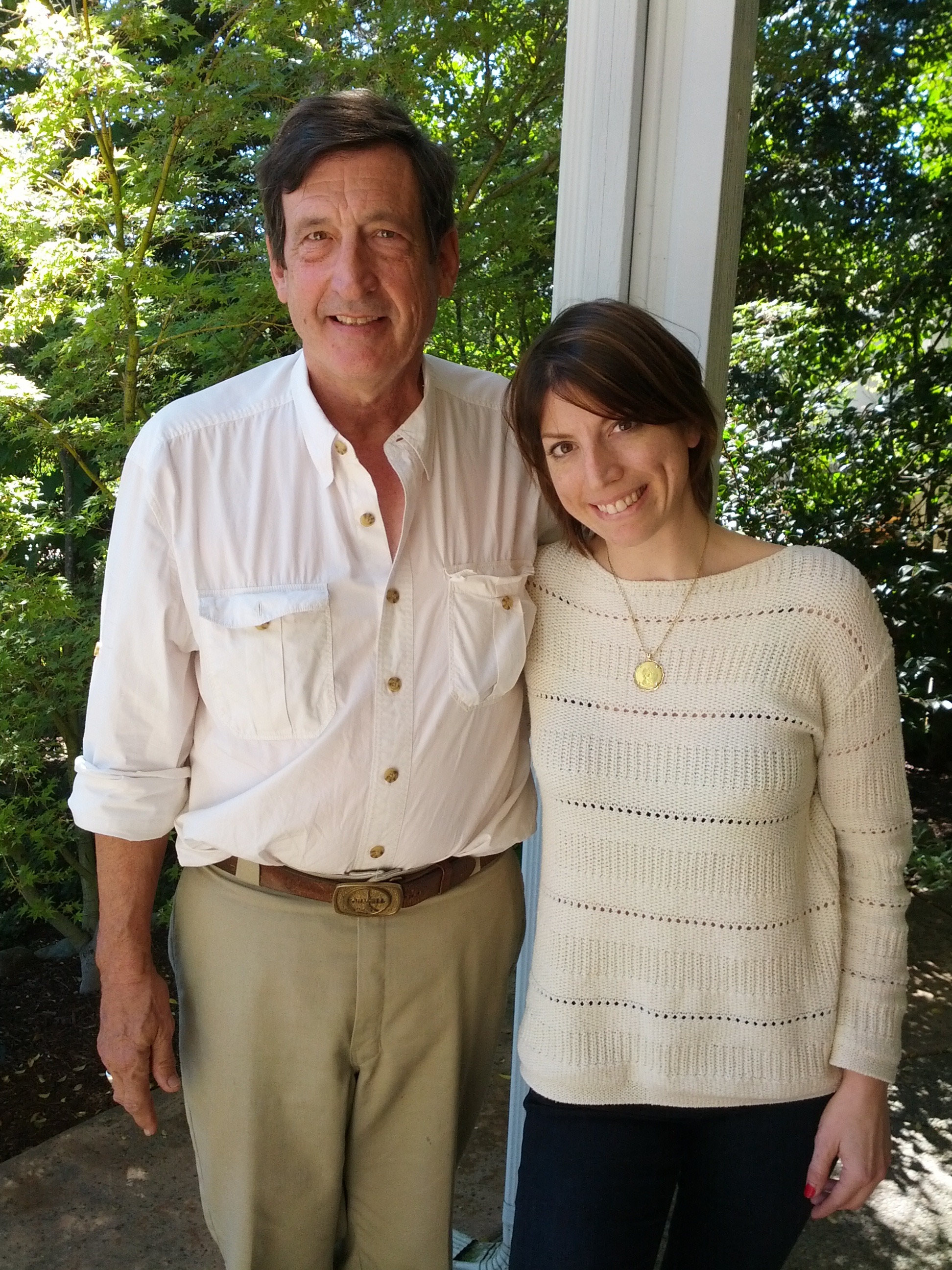
Another fact: that guy up there is my dad, and this was a picture that I didn’t mean to find. There aren’t many pictures of my dad on any of my computers. There are barely any on the Internet; I found two. Now there are three.
Dad and Jane were traveling through California while I was visiting my favorite Auntie in Sacramento some months ago. I got nervous when the prospect of them dropping by came up; I hadn’t seen my dad in over five years. But I agreed. What was I gonna do? Say no? No, because that just isn’t my style, even if my stomach hurt terribly that morning and I bit my thumb cuticle on my left hand till I drew blood.
Aunt Leesa and I made muffins; the meetup was going to be brunch at her house. We made strong coffee. My auntie knows how I feel about my dad (complicated) and she knows the early story of my family (lousy, complicated) but she’s not a Ground Zero Crewmember so she’s about the best person on the planet to sit next to at brunch if you’re me and Dad’s across the table. She also grew up with the guy, so she knows when he’s, you know. Full of muffin. Which he is.
I could write a novel about how that two-hour brunch went, what with all the labyrinthine thought processes running through memory and curiosity at the same time, trying to result in conversation not emotional but still genuine, not slow-burn rage-y but not without bite. You want those who have hurt you to hear a little bite in your voice, don’t you? We all want to punish, even while we eat bacon. Especially while we eat bacon.
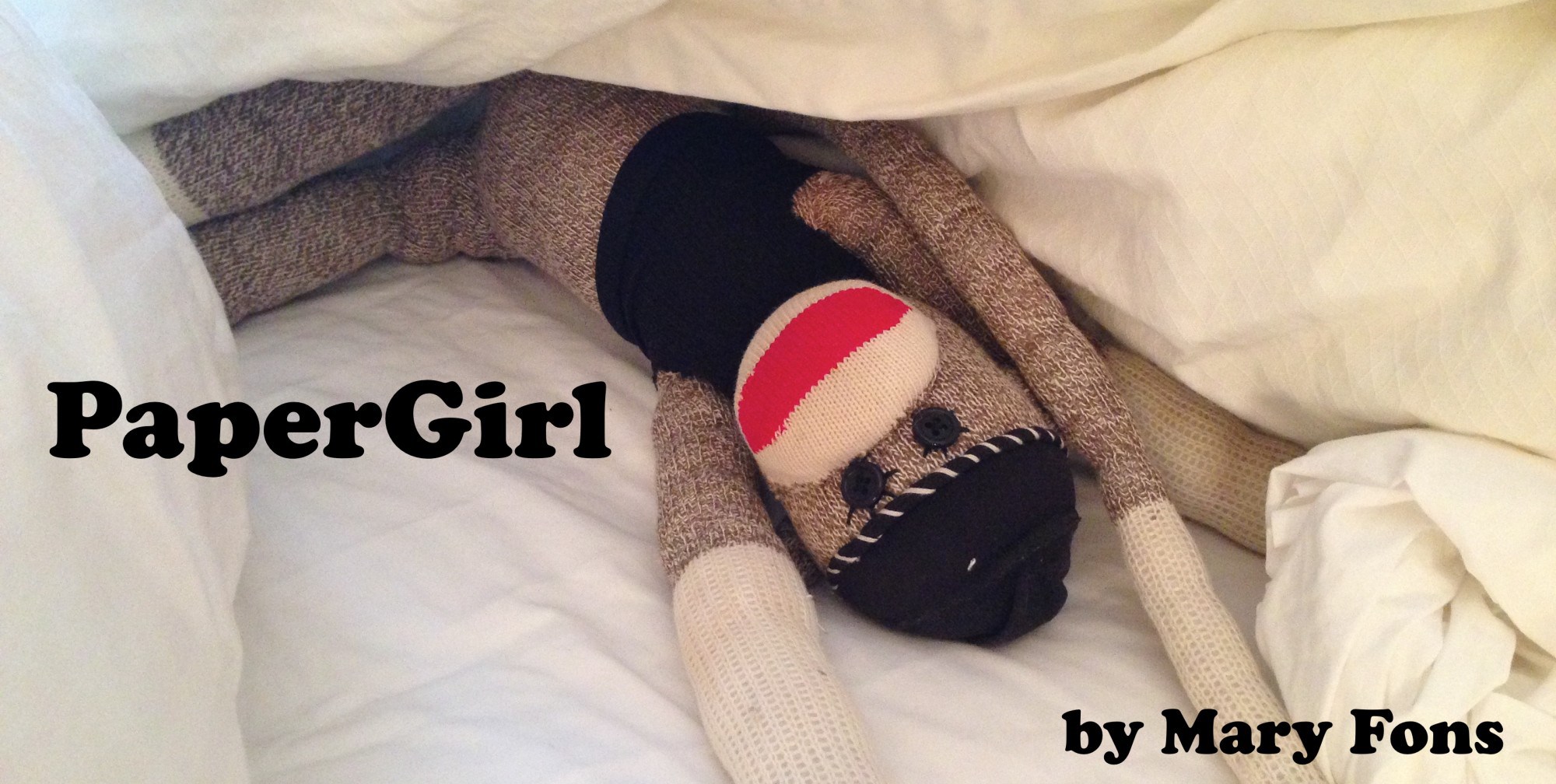
You know what’s weird? Writing PaperGirl.

It’s surprising how infrequently the AIDS Memorial Quilt comes up among quilters. That’s not an admonishment, it’s just my experience. I realized recently the only time I talk about the AIDS Memorial Quilt is when a person outside the quilt world (someone on an airplane, maybe) says something like, “You make quilts? That’s cool. Hey, what about that AIDS quilt? What happened with that? Are people still doing it?” For a long time, I’ve cocked my head and gone, “Yeah, the AIDS Quilt. I need to check up on that, actually.”
No kidding, Ms. Ima Quilter.
The NAMES Project AIDS Memorial Quilt (usually referred to as “The AIDS Quilt”) was launched by The NAMES Project in 1987. If you follow the timeline of the Great American Quilt Revival, the AIDS Quilt was a significant moment in the third phase of it. Quilts were back in the cultural landscape and the quilt industry was booming.
And people were dying of HIV/AIDS. Dying within months of a diagnosis. Dying without any medical care to speak of. Many were dying alone, rejected by society — even by their own families. Entire communities, friend groups, clubs, were wiped out by a disease that no one understood or could control. Look:
1981 –> 159 deaths
1982 –> 618 deaths
1983 –> 2,118 deaths
1984 –> 5,596 deaths
1985 –> 12,529 deaths
The first time President Reagan said the word “AIDS” in public was 1986. Friends, lovers, partners, teachers, doctors, neighbors, artists, businesspeople, servicemen and servicewomen — these were the people dying every day, but nothing but silence came from people in power. This was “the gay cancer.” The sorrow, silence, rage, fear, and helplessness, this drove those whose lives had been touched by the ghostly hand of AIDS to take action. Money was raised, initiatives were launched to increase awareness about the disease and promote safer sex; there were marches in the streets, pleas in Washington from parents who were burying their children.
What else? What else can ever be done to make sense of senseless horror? What would you do if six of your closest friends died in a single month? If you got diagnosed today with a fast-moving disease with a 100% mortality rate? What would you do to show people in charge that you and your people are literally dying for help?
The AIDS Quilt, a handmade tribute to those who had so far died of HIV/AIDS, was unveiled on the National Mall in Washington DC in 1987. On that day, there were thousands of panels in the quilt, which was as large as two city blocks. More than 2,000 names were written, painted, stitched, pressed, glued, poured into the fabric. Many names on the quilt were only first names, as the shame of being gay was too much for the families who still needed to memorialize their beloved son* with a panel in the softest biggest memorial in American history.
It’s hard to research this. It’s more than that: it’s devastating. The pictures from the hospitals. The testimonials. The statistics. I’m lucky, though: I’m not researching the AIDS epidemic, I’m researching the AIDS Quilt. The quilt is doing for me what it was created to do: it takes sadness and reshapes it into hope in the human race in the fight against pestilence and suffering. Over 48,000 panels have been made today; pieces of the largest quilt in the world travel around the globe to raise awareness that HIV/AIDS has no cure and help people understand how not to get the disease. The quilt continues to grow, even as HIV/AIDS treatments are light years ahead of where they were when the first panels were made.
The lecture will be finished this summer. I hope the sorrow that led to the AIDS Quilt doesn’t keep people from to requesting it. The AIDS Quilt is not a gravestone; it’s a celebration of life.
*AIDS did not claim — and does not claim, present tense — only homosexual male lives. Children, as well as women both gay and straight were/are casualties, too. The majority of the victims at the time of the first unfurling of the quilt, however, were gay men.

I was invited to teach a class at the 2017 QuiltCon and the one that they want is my (new!) class on partial seaming. The block above — which is old as the hills — uses partial seaming and will be the basis of the class. I’m calling it the “Sweetpea Star” but it surely has ten names already. “Partial” and “seaming” are two words that when used together make many quilters flinch. Isn’t that something garment makers do? Surely there’s a shortcut. A special ruler, perhaps?
Yes, garment makers use partial seams, but patchwork makers can, too: including you, if cutting up big pieces of fabric into small pieces of fabric and then sewing them back together again is your cup of tea. Are there shortcuts? Special tools? For most partially seamed blocks, yeah, but if you see a killer block that uses partial seaming and then you try to find a way around doing that part, you won’t get the same thing. The shapes will be a little narrower, maybe, or a little wider. It’ll look close, but not as good.
It’s like a designer handbag: you can totally buy the knock-off version, and okay, sure, it looks pretty good. You might even get compliments on it. But there are those who will know, who will ask you where you got your bag and, because you are honest, you will say, nervously, “Oh, well, haha, you know, a store — hey, are you hungry? Let’s get a panini.”
And of course, you’ll know. You’ll know you did some dirty patchwork to avoid doing partial seams. And you’ll have to live with that. You’ll have to live with that a long time.
This is a strange way to invite guild programming officers to request my new “No-Fear Partial Seams: Sweetpea Star Block” class when you contact me about coming to a guild near you. It’s also an announcement that I’ll be teaching at QuiltCon in Savannah in February and those planning to attend should register for the class. (I’ll be teaching two blocks of it and will debut a new lecture at the show, as well.)
You can do something hard. Usually, it’s not even hard. You just tried it once (whatever it was) and it yes, it was hard, so you got it in your mind that that thing is hard and you can’t do it, so you say you don’t want to do it. But you kind of do want to do the hard thing, deep down. I don’t know about all those other people, but if you’re a quilter facing a hard situation, I have fabulous news for you:
Fabric is soft.

The death of Prince sidelined the follow-up to my trip to NYC. I’m happy to report that I had the most wonderful day.
Well, it was wonderful once I was not in the act of waking up at 3:30am. That was uncomfortable. But once I was vertical, the day glided along like it was on rails. Since I was going to New York City and coming home within a matter of hours, I needed no luggage. I took my Jim Shore patchwork shopper (autographed, because he’s a good pal of mine and you betch’yer buttons I’m name-dropping) which easily held my laptop and all my personal effects; I also carried a modest totebag with a quilt, a book, and some Small Wonders swag for the people at the recording studio. Do you know the glory of walking into an airport and going straight to security with no stop at the ticket counter, no luggage check? It’s intoxicating. And I’m TSA Pre-Check, too, so it was me, an electronic boarding pass and a prayer, baby. Que bella.
When I landed at LaGuardia, I had time before I was to meet my sister for lunch, so I took public transportation into Manhattan. Why not? I had time and I had no luggage. Had that not been the case, I’m sure I’d have taken a taxi. But I was footloose! Fancy! Free! The sun was shining, the temperature was perfect: 69-degrees and all sunshine. I was a woman with time on her hands.
The bus took me to a train; after that train there was to be another to get to my sister’s office. But I bailed on the train transfer and got out at 63rd and Lexington in order to walk the remaining thirty blocks to Hannah. Thirty?! Yeah, sure. City blocks in Manhattan are short and pure entertainment.
I saw puppies playing in the window of a pet shop (see above.) I saw a tiny cemetery, restful and serene, stuck between two buildings; I saw a two different girls wearing tiny hats, so that must be the new thing; there was a man in a suit that I know cost more than most people make in a month or more; bodegas, murals, homeless, worker bees, dogs, babies. Muppets. Ballerinas. Unicorns.
The time I spent with my sister was like, soul good. We needed a good cup of coffee and that’s precisely what we had. If that was the only thing I was in New York to do, that would have been worth every penny. And the guest spot on the Good Life Project podcast went great, I think. I got choked up at the end, so it was certainly something. (The episode I’ll be on won’t air for several months; I’ll let you know when it goes up.) After the show, I headed back to the train and bus combo; I got to the airport with no issue. Walked onto the plane. Back in time for dinner.
New York, you’re all right. Your spring flowers up against all that graffiti looked so good to me yesterday, I came quite close to missing you. Chicago says hi.